

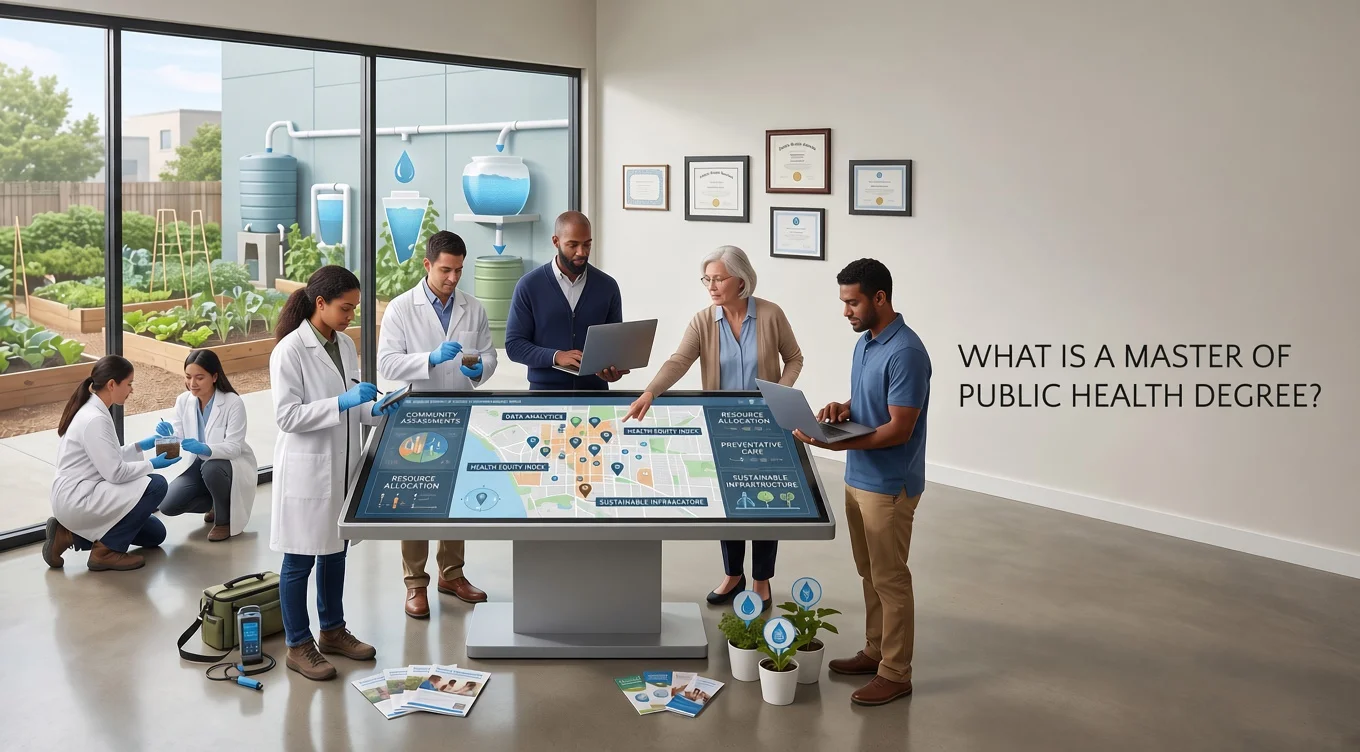
What is a master of Public Health degree?
A Master of Public Health (MPH) is a multidisciplinary professional graduate degree designed to train practitioners to protect and improve the health of human populations. While clinical medicine focuses on diagnosing and treating individual patients after they become ill, an MPH program focuses on disease prevention, health education, policy recommendations, and systemic health interventions at local, national, and global levels. Individuals who earn this degree work across public, private, and non-profit sectors to address complex health challenges ranging from pandemic response to environmental safety.
Choosing a graduate degree is a huge decision, one that feels like it could define your entire career. You’re probably balancing ambition with practicality, wondering if the investment in time and tuition is truly worth it for a master of public health degree. You want to make a difference, but you also need a clear path forward, right?
Well, you’ve landed in the right place. We’re going to pull back the curtain on the MPH degree, look at what it actually entails, the kind of students it attracts, and where it can take you. This isn’t just about earning another credential; it’s about equipping yourself to tackle some of the world’s most pressing health challenges.
So, let’s unpack what a master of public health degree really means for your future, and whether it’s the right advanced degree for you.
Key Takeaways
- A Master of Public Health (MPH) degree prepares professionals to address health challenges at a community or population level, focusing on prevention and health equity rather than individual patient care.
- MPH programs are interdisciplinary, typically covering core areas like epidemiology, biostatistics, environmental health, health policy, and social and behavioral sciences, equipping students with a broad set of public health skills.
- Admission to an MPH program usually requires a bachelor’s degree, strong academic records, relevant work experience, and often GRE scores, with a focus on a compelling statement of purpose.
- Students can specialize in areas such as global health, community health, health education, or healthcare administration, tailoring their coursework to specific public health problems and career aspirations.
- An MPH degree opens doors to diverse roles in government agencies, non-profits, research centers, and private sectors, all aimed at improving the health of populations through evidence-based approaches.
What is a Master of Public Health (MPH) Degree?
A Master of Public Health (MPH) is a professional master’s degree centered on population-wide health improvement, disease prevention, and health equity, rather than individual clinical care.
Unlike medical degrees that focus on treating illness in individuals, an MPH degree zeroes in on health at a population level. Think preventing disease, promoting wellness, and protecting the health of entire communities or even global populations.
It’s about understanding the big picture—why health inequities exist, how policies affect health outcomes, and what strategies truly improve the health of populations. If you’re passionate about collective well-being and tackling systemic public health problems, this might just be your calling.
The Core Mission of Public Health
The field of public health is all about keeping people healthy and preventing illness before it starts. This means everything from ensuring clean water and air to designing health education campaigns and influencing public health policy. Public health professionals are the unsung heroes working behind the scenes to make our communities safer and healthier. They address health challenges by looking at the social, economic, and environmental factors that impact well-being.
MPH vs. Other Health Degrees
Sometimes students confuse an MPH with other health-related graduate degrees. While there’s overlap, the focus is distinct. An MD (Doctor of Medicine) trains physicians to treat individual patients. A PhD in public health, on the other hand, is generally a research-focused degree for those aiming for academic or high-level research roles. The MPH program is practice-oriented; it’s for those who want to apply knowledge and skills directly to public health practice, to be on the front lines, so to speak.
It’s a robust master of public health program that develops leaders who can implement health programs, assess community needs, and advocate for health equity. It’s truly a diverse profession, touching on many aspects of health sciences.
Core Competencies and Curriculum
Every accredited master of public health program, particularly those recognized by the Council on Education for Public Health (CEPH), shares a foundational curriculum designed to ensure mph graduates possess a common set of competencies. These are the essential public health skills you’ll need to hit the ground running.
Here are the traditional core areas you can expect to dive into:
- Biostatistics: This involves learning how to collect, analyze, and interpret health data. It’s all about making sense of numbers to understand health trends and the effectiveness of interventions. You’ll learn to calculate risk, analyze prevalence, and apply statistical methods to public health research.
- Epidemiology: If biostatistics is the ‘how many,’ epidemiology is the ‘who, what, where, and why’ of disease. It’s the study of the distribution and determinants of health-related states or events in specified populations, and the application of this study to the control of health problems. Think tracking outbreaks, identifying risk factors, and designing studies.
- Environmental Health Sciences: This area explores how our surroundings—the air we breathe, the water we drink, the places we live and work—impact our health. You’ll look at topics like toxicology, disaster preparedness, climate change, and occupational health, and how to mitigate environmental hazards. This is crucial for preventing disease at a population scale.
- Health Policy and Management: This covers the public health policy processes, healthcare administration, economics, and ethics that shape our health systems. You’ll learn how public health policy is developed, implemented, and evaluated, and how to lead health organizations and programs. Understanding this is key to driving systemic change.
- Social and Behavioral Sciences: This domain investigates the social, cultural, and behavioral factors that influence health and disease. It’s about understanding human behavior, health promotion strategies, and how to design effective health education programs that resonate with diverse communities. This helps address health challenges at their roots.
These core coursework areas form the backbone of any quality MPH curriculum, preparing students for the complexities of the public health field.
Need Help with Your Graduate Applications?
Our expert writers can help you craft compelling statements and essays for your MPH program applications. Let us refine your personal statement and supporting documents to make your application stand out. Focus on your goals while we ensure your writing is polished and persuasive.
Specializations and Concentrations in Public Health
While the core curriculum provides a broad foundation, one of the most exciting aspects of an MPH program is the opportunity to specialize. Most schools of public health (often called SPH or college of public health) offer various concentrations, allowing mph students to tailor their master of public health program to their specific interests and career aspirations. This is where you really start to focus on the public health problems you’re most passionate about.
Here are some common specializations you might encounter:
- Global Health: Focuses on health issues that transcend national borders, like pandemics, health disparities in developing countries, and international health policy. This often involves working with international organizations and addressing health equity on a grand scale.
- Community Health Sciences: Concentrates on health promotion and disease prevention at the local community level. It involves working directly with populations to assess needs, develop interventions, and build healthier environments. This is where many health programs are directly implemented.
- Health Education and Communication: Equips students to design, implement, and evaluate health education programs and campaigns. This might involve behavior change theories, health literacy, and various communication strategies to improve health outcomes.
- Environmental Health: A deeper dive into the relationship between people and their environment, covering topics like food safety, air and water quality, and toxicology. This specialization is vital for preventing disease related to environmental factors.
- Epidemiology: For MPH students who love data and disease investigation, this specialization provides advanced training in epidemiologic methods, study design, and data analysis to track and control health events. Many mph students find this rigorous and rewarding.
- Health Policy and Management (or Healthcare Administration): Focuses on the administrative and policy aspects of health systems, including healthcare delivery, finance, and health services research. This prepares individuals for leadership roles in health departments and other health organizations.
- Maternal and Child Health: Addresses the unique health needs of women, infants, children, and adolescents, often focusing on program planning, intervention, and advocacy for these vulnerable populations.
- Biostatistics: A highly quantitative specialization for students who want to become experts in statistical methods for public health research, data management, and analysis.
Some programs also offer dual degree options, combining an MPH with another master’s degree like a JD (law), MBA (business administration), or an MSW (social work), which can significantly broaden your career prospects in the public health field.
Admission Requirements and What It Takes to Get In
So, you’re thinking this might be for you. Great! But what do you need to actually get into a master of public health program? Admission requirements can vary slightly between institutions, but there are some common threads across most accredited MPH programs.
Academic Prerequisites
Generally, you’ll need a bachelor’s degree from an accredited institution. While some schools prefer applicants with a health-related background, many MPH programs welcome students from diverse academic disciplines—biology, social sciences, humanities, business, engineering, you name it. What matters more is demonstrating a clear interest in public health and the ability to handle rigorous graduate-level coursework.
Your academic transcripts will be closely reviewed, often looking for a strong GPA, especially in quantitative subjects if you’re eyeing specializations like epidemiology or biostatistics. And yes, sometimes they still ask for GRE scores, though many schools are making them optional these days. Always check the specific program you’re interested in.
Beyond the Grades: Your Application Package
This is where you really get to tell your story. Admissions committees want to see your passion and your potential. Here’s what’s typically expected:
- Statement of Purpose/Personal Statement: This is your chance to shine. Articulate why you want to pursue a master of public health degree, what specific public health problems you care about, and how your past experiences—academic, professional, or volunteer—have prepared you. Showcase your understanding of the public health field. If you’re struggling with articulating your vision, thinking about how to write a career goals essay can be a useful exercise, even for a personal statement.
- Letters of Recommendation: Aim for letters Public Healthrs who know your academic abilities well and from supervisors who can speak to your professional skills and work ethic. They should highlight your competency and dedication.
- Resume/CV: Detail your relevant work experience, volunteer activities, research projects, and any publications or presentations. Even seemingly unrelated experiences can be framed to show your commitment to service or community engagement.
- Interviews: Some programs may require an interview, which is another opportunity to demonstrate your enthusiasm, communication skills, and readiness for the rigors of an MPH program.
Many MPH students also have some real-world experience in a health-related field. This isn’t always mandatory but can significantly strengthen your application, showing that you already have some exposure to public health challenges.
Conquer Your Capstone!
Facing a challenging MPH capstone project or major paper? Our experienced writers offer tailored assistance, from research guidance to comprehensive editing. Ensure your final project meets the highest academic standards and effectively showcases your public health expertise. Submit with confidence.
The MPH Experience: What to Expect
Once you’re in, what’s life like as an MPH student? It’s intense, it’s rewarding, and it’s certainly diverse. You’ll find yourself surrounded by motivated individuals, often from vastly different backgrounds, all united by a common goal: to improve public health outcomes.
The MPH Curriculum and Learning Environment
Most MPH programs are designed to be completed in two years for full-time students, often involving a 42-credit hour structure, though accelerated or part-time options exist. The coursework will challenge you to think critically, analyze complex data, and develop evidence-based approaches to health problems. You’ll engage in lectures, seminars, group projects, and discussions. Many programs also integrate current public health issues directly into their curriculum, making your learning highly relevant.
You’ll learn from faculty who are active in public health research and practice, often bringing their real-world experience into the classroom. The learning environment fosters collaboration and critical thinking, preparing you for the complexities of the profession.
The Applied Practice Experience (APEX)
A hallmark of an accredited MPH program is the applied practice experience, often called a practicum or internship. This is where you gain real-world experience, applying the knowledge and skills learned in your coursework to a practical public health setting. You might work with health departments, non-profit organizations, government agencies like the CDC, or global health organizations.
This hands-on experience is invaluable for connecting theory to practice and building your professional network. It’s also often a requirement for mph graduates to demonstrate competency in several public health domains.
The Capstone Project
Towards the end of your master of public health degree, you’ll typically complete a capstone project. This could be a research paper, a program evaluation, a policy analysis, or a comprehensive plan addressing a specific public health issue. It’s an opportunity to synthesize your learning and demonstrate your mastery of pMPHic health skills. This can be a significant undertaking, similar to writing a master’s thesis, albeit often with a more practical focus.
Career Paths for MPH Graduates
One of the most appealing aspects of pursuing a master of public health degree is the incredible breadth of career opportunities it unlocks. MPH graduates are in demand across various sectors, all working towards improving health outcomes. The Bureau of Labor Statistics projects continued growth in many health professions, and the public health field is no exception.
Here’s a glimpse into the diverse roles and settings where you might find MPH graduates:
Government Agencies
Many MPH professionals work at local, state, and federal health departments. Roles here might include:
- Epidemiologist: Investigating disease outbreaks, tracking health trends, and recommending control measures.
- Health Educator: Developing and implementing health promotion programs for specific populations.
- Public Health Analyst: Researching and evaluating public health policies and programs.
- Environmental Health Specialist: Ensuring compliance with environmental regulations and addressing public health problems related to the environment.
Non-Profit Organizations
Non-profits often focus on specific health challenges or underserved populations. MPH graduates can work as:
- Program Manager: Designing, managing, and evaluating health programs, from community health initiatives to global health interventions.
- Advocacy Coordinator: Working to influence public health policy and advocate for health equity.
- Researcher: Conducting public health research to inform interventions and policies.
Healthcare Systems
Even within hospitals and healthcare systems, there’s a growing need for public health expertise, particularly in population health management and preventing disease. Roles include:
- Population Health Coordinator: Focusing on the health needs of patient populations, often involving data analysis and intervention planning.
- Infection Control Specialist: Working to prevent hospital-acquired infections.
- Community Outreach Manager: Connecting hospital services with community needs.
Private Sector and Academia
Don’t forget the private sector! Pharmaceutical companies, consulting firms, and even tech companies hire MPH graduates for roles in:
- Clinical Research Coordinator: Managing clinical trials, especially those focused on population-level health interventions.
- Health Consultant: Advising organizations on public health strategies and interventions.
- Data Analyst: Analyzing large datasets to identify health trends and inform business decisions.
And, of course, many MPH graduates go on to work in research centers or pursue further graduate study, eventually teaching and conducting advanced public health research in schools of public health.
Is an MPH Right for You?
Choosing a graduate degree is a significant decision, and I know you’re probably weighing all the pros and cons. So, let’s talk about whether a master of public health degree truly aligns with your aspirations and strengths. It’s not just about what is a master of public health degree, but what kind of public health professional you want to be.
Ideal Candidates for an MPH Program
People who thrive in MPH programs and careers often share certain characteristics:
- Passion for Social Justice: A deep desire to address health inequity and improve the health of populations, especially vulnerable ones.
- Analytical Mindset: You enjoy problem-solving, working with data, and applying evidence-based approaches to complex issues.
- Strong Communication Skills: Whether it’s presenting research, educating communities, or advocating for public health policy, effective communication is key. In any profession, understanding why writing is important is crucial for success, especially in public health where clear communication can literally save lives.
- Collaborative Spirit: Public health is rarely a solo endeavor. You’ll work with diverse teams, community partners, government agencies, and other health professionals.
- Resilience and Adaptability: Public health challenges are ever-evolving, from new infectious diseases to chronic health problems and the ongoing battle for health equity. You need to be ready to adapt and persevere.
If you find yourself nodding along to these points, an MPH might be an excellent fit.
Long-Term Impact and Outlook
The impact of an MPH is profound. You’re not just earning an advanced degree; you’re gaining the knowledge and skills to make a tangible difference in people’s lives on a broad scale. From preventing disease to promoting well-being, public health offers a dynamic and meaningful profession.
The global landscape continues to highlight the critical need for skilled public health professionals. Whether it’s managing global health crises, combating chronic health problems, or developing innovative health programs, MPH graduates are at the forefront. The competencies you gain – from epidemiology to health policy – are transferable and highly valued in both domestic and international contexts. If you’re looking for a career that combines intellectual rigor with real-world impact, where your work can genuinely improve the health of populations, then exploring a master of public health degree is definitely worth your time.
Still Unsure? Get Personalized Advice!
Navigating graduate school options and career paths can be complex. Connect with our academic advisors for tailored insights into the MPH degree and its suitability for your ambitions. Gain clarity on your future in public health and make informed decisions.
So what now?
You’ve seen what is a Master of Public Health degree, the rigorous coursework, the diverse specializations, and the impactful career paths it can lead to. It’s a graduate degree that empowers you to look beyond individual care and really tackle the systemic issues affecting our health and well-being as a society. From global health crises to local community health initiatives, MPH graduates are truly making a difference.
If the idea of preventing disease, promoting health equity, and shaping public health policy excites you, then I really encourage you to explore this path further. Look into specific schools of public health, check their MPH curriculum, and see which programs align with your passion for improving the health of populations. It’s a challenging journey, one that promises deep satisfaction and a profound contribution to the world.
Your future in public health could be just around the corner, and knowing exactly what is a master of public health degree is your first step toward that incredibly rewarding profession.
Master of Public Health FAQs

With a student-centered approach, I create engaging and informative blog posts that tackle relevant topics for students. My content aims to equip students with the knowledge and tools they need to succeed academically and beyond.

