
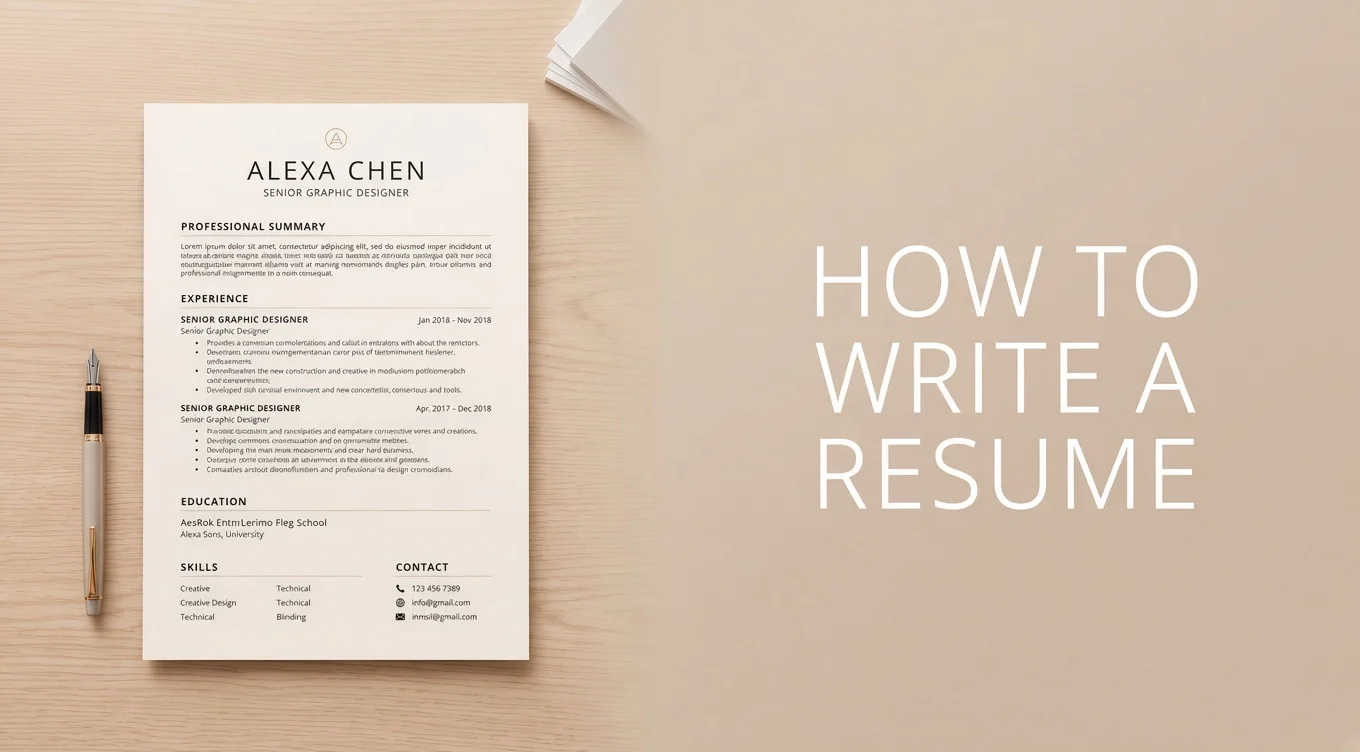
How to write a resume starts with choosing a reverse-chronological format, adding clear contact details, writing a short professional summary, listing quantified achievements under each role with action verbs, including relevant education and skills, and optimizing keywords from the job description so both applicant tracking systems and recruiters can quickly see your value. Keep it to one page if you have under five years of experience, use a clean single-column layout, and tailor it for every application.
Learning how to write a resume is essentially learning how to translate your academic and life experience into a language that recruitment software and tired human beings actually understand. We are going to walk through this together, from the very first heading to the final PDF export. By the time we are done, you will have a strong resume that actually looks like it belongs on the desk of a top-tier manager. So yeah, let us get that blank page filled with something that works.
Choosing Your Resume Format
To write a resume, use a reverse-chronological format, put contact information and a 2–4 sentence professional summary at the top, list each job with 3–5 achievement-focused bullet points that start with action verbs and include numbers, add education and a skills section that mirrors keywords from the job description, keep the layout single-column and simple for ATS compatibility, and limit it to one page for early-career candidates.
On format: The best resume format for most people in 2026 is reverse-chronological. It lists your most recent experience first, is what recruiters expect, and is the most compatible with applicant tracking systems. Use a functional or hybrid format only if you have significant career gaps or are making a major industry change.
On ATS: To make a resume ATS-friendly, use standard section headings such as Work Experience, Education, and Skills; stick to a single-column layout with no tables, graphics, or text boxes; incorporate exact keywords from the job description naturally; save as a PDF (or the format requested); and place contact information in the main body rather than headers or footers.
On experience bullets: Strong experience bullets follow a simple pattern: start with a powerful action verb, describe what you did, and end with a measurable result. Example: “Increased social media engagement 28% in six months by launching a content calendar and A/B testing posts.” Aim for three to five bullets per role and quantify whenever possible.
On length: A student or recent-graduate resume should almost always be one page. Professionals with more than 10 years of highly relevant experience can use two pages. Recruiters prefer concise documents and rarely read beyond the first page on initial review.
On skills: List hard skills (software, languages, technical tools) that match the job description and support them with evidence in your experience bullets. Soft skills such as leadership or communication are better shown through achievements than simply listed. Honesty matters; only claim skills you can discuss in an interview.
On tailoring: Yes, you should adjust your resume for every job. You do not need a complete rewrite; reorder or emphasize the most relevant bullets, mirror key phrases from the posting, and update the professional summary. Tailored resumes significantly increase interview rates compared with generic versions.
Need a head start?
Our team of professional resume writers can help you build a document that highlights your strengths and gets you noticed. We ensure your document meets all industry standards for 2026. Let us help you craft a narrative that opens doors to top-tier companies.
How To Write A Resume That Beats The Bots
Most large companies today use an applicant tracking system (ATS) to scan the thousands of applications they receive every single day. This database is essentially a giant filter that looks for specific keywords and phrases that match the job posting. If your resume does not have the right terms, it might never even reach a human recruiter. It is not because you aren’t qualified. Because your document didn’t speak the right language.
To beat the applicant tracking system, you need to read the job description carefully. Look for the hard skills and specific software mentioned most often. If they want someone with experience in social media engagement and data analysis, those exact phrases need to appear in your text. This is not cheating; it is just helping the software realize you are a match. Ethical recruitment and selection standards often rely on these systems to ensure a fair initial screening, so playing by the rules is essential.
Here is a list of ways to make your resume bot-friendly:
- Use standard headings like Work History and Education instead of creative titles.
- Stick to a clean, simple layout without too many columns or fancy graphics.
- Save your final version as a PDF, but keep a plain text version handy just in case.
- Incorporate keywords naturally into your bullet points rather than just listing them in a block.
- Avoid placing important contact info in the header or footer, as some older systems can’t read those areas.
Mastering The Experience Section
This is the meat of the document, the part where you actually prove you know what you are doing. Instead of just listing your job duties like a shopping list, focus on your accomplishments. Employers do not just want to know what you were supposed to do; they want to know how well you did it. This is where you use action verbs to start every bullet point. Words like managed, developed, or coordinated sound much better than was responsible for.
Here’s the weird part: numbers are your best friend here. Use statistics and data to give your claims some weight. Did you increase social media engagement by twenty percent? Say that. Did you manage a budget for a slide cafe business plan during a class project? Put it in there. Even if it was just a part-time job or an internship, find a way to quantify what you achieved. It makes your claims feel real and tangible.
For each job or internship, follow this structure:
- Start with your job title and the company name.
- Include the dates you worked there (month and year).
- Use three to five bullet points that highlight specific results.
- Mention any specific tool or software you used to get the job done.
- Align your tasks with the requirements of the job you’re applying for.
Education And Skills For The Modern Student
If you are still in school or recently graduated, your education section might be more impressive than your work history. That is perfectly fine. You can list your relevant coursework, GPA (if it is above a 3.5), and any honors you have received. Mentioning things like a complex project on how to write a thesis paper can demonstrate your research and writing abilities even if you haven’t had a full-time job yet.
When it comes to the skill section, honesty is key. Don’t claim to be an expert in Python if you only watched one YouTube video about it. Divide your skills into hard skills (like coding, accounting, or foreign languages) and soft skills (like communication or strategic leadership). However, try to show your soft skills through your experience rather than just listing them. Everyone says they are a team player; very few people show how they used the importance of interdisciplinary collaboration to solve a problem in a group setting.
Stuck on your draft?
If the words just won’t come, our professional resume templates and writing services can give you the edge you need. We specialize in helping students translate academic achievements into professional wins. Get a polished document that makes hiring managers stop and read.
Using A Resume Builder Or Template
Let’s be honest, designing a professional resume from scratch in a word processor is a nightmare. One small change to a margin and the whole thing explodes. This is why a free resume builder or an online resume maker can be a lifesaver. These tools provide professional-looking layouts that are already optimized for recruitment software. You just plug in your information and let the tool handle the formatting.
Using a resume template allows you to focus on the content rather than the font size. You can find many free online resume builder options that offer modern designs. Just be careful not to pick something too flashy. Creativity is great for a marketing job, but for most roles, a clean and professional resume is the goal. You want the recruiter to notice your accomplishments, not your choice of neon pink accents.
If you decide to use a free online tool, remember these tips:
- Check if the output is compatible with an applicant tracking system.
- Ensure you can export the document as a high-quality PDF.
- Don’t feel like you have to fill every single box the template provides.
- Make sure the resume looks good when printed in black and white.
- Double-check that your email and contact info are easy to find.
The Resume And Cover Letter Duo
Your résumé does not travel alone. Almost every job application requires a cover letter to go along with it. While the résumé provides the facts, the cover letter provides the context. It is your chance to show some personality and explain why you actually want the job. It is a marketing strategy for your personal brand. If you use the same generic cover letter for every job, people will notice. They want to see that you have done your research on the company.
Think of the cover letter as the bridge between your past experience and your future goals. It should address the specific needs mentioned in the job posting and explain how your unique history makes you the perfect fit. If you are applying for a role that involves Canadian Labor Market Training or something equally specific, mention your background in that area. Use it as an opportunity to expand on a bullet point that didn’t get enough space on the resume itself.
Making Your Resume Stand Out In 2026
With AI-powered tools becoming more common in recruitment, your resume needs to feel human. While you should use keywords, do not let your writing become robotic. Refine your language until it sounds natural. A resume may be a formal document, but it should still tell a story. Mentioning a passion project or a unique volunteer experience can help you land that interview by making you more memorable than a list of credentials.
Here are some final tips to make a resume that pops:
- Keep it to one page if you have less than five years of experience.
- Use a standard font like Arial, Calibri, or Georgia.
- Avoid using a photo of yourself unless it is common in your specific industry.
- Proofread the entire thing three times to catch any typos.
- Ask a friend or a professional resume writer to review your resume before you hit send.
Ready to apply?
Stop worrying about the formatting and start focusing on the interview with our expert resume writing services. We help you tailor every application to stand out in the competitive 2026 job market. Your career success starts with a document that demands attention.
The real ending, I guess
At the end of the day, learning how to write a resume is about more than just finding the right template. It is about recognizing the value of your own experiences and figuring out how to present them to the world. It is okay if you feel a little bit like an impostor while writing it; almost everyone does. But by following these steps—focusing on your achievements, using the right keywords, and keeping your layout clean—you are giving yourself the best possible shot at success.
So yeah, take a deep breath and give that draft one final look. You have the skills, you have the education, and now you have the tool to show them off. Whether you are aiming for an internship or your first big career move, a professional resume is your ticket to the next stage. Don’t let a blank page stand between you and your dream job. You’ve got this, and if you ever get stuck, just remember that every expert was once a student staring at a blinking cursor just like you. Good luck out there in the 2026 job market.
Resume Writing FAQs

With a deep understanding of the student experience, I craft blog content that resonates with young learners. My articles offer practical advice and actionable strategies to help students achieve a healthy and successful academic life.