

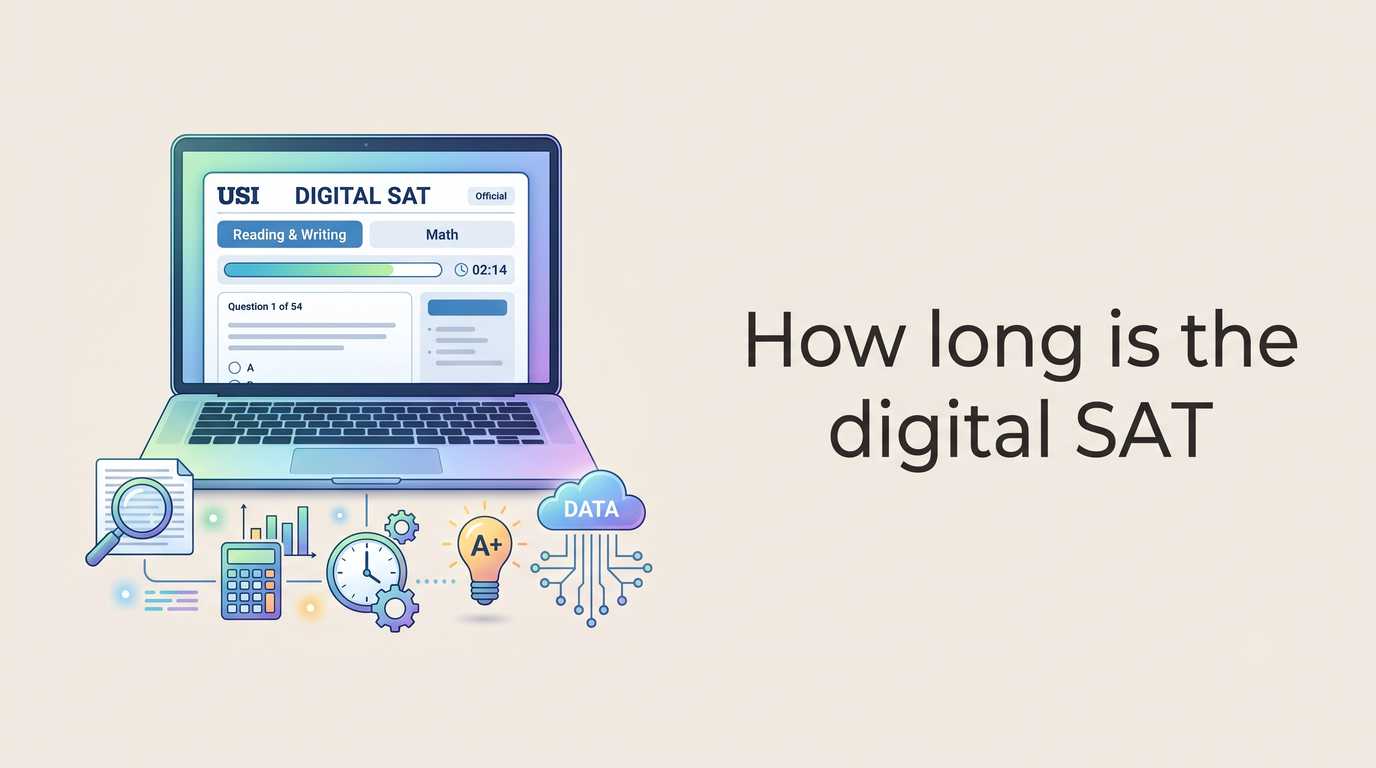
Alright, let’s talk about the digital SAT. You’re probably picturing the old paper SAT, right? That marathon of an exam that felt like it sucked up your entire Saturday, leaving you mentally drained and questioning all your life choices. I totally get it. For years, students braced themselves for a grueling several-hour session, bubbling in answers and flipping pages, trying to keep track of the time as the proctor hovered.
But here’s the thing: things have changed. The College Board has made a pretty big shift, moving the entire SAT experience online. This isn’t just about taking the same test on a computer; it’s a fundamental redesign, and one of the biggest questions on everyone’s mind is, naturally, how long is the digital SAT now?
Maybe you’re feeling the pressure, trying to plan your test day strategy, or just wondering if you can still fit in a decent brunch afterward. Whatever your reason, knowing the exact testing time and structure is crucial for your SAT prep. Forget those old paper SAT horror stories; the new digital SAT is a different beast altogether, and honestly, a much more manageable one in terms of duration. We’re going to break down every minute of the actual test so you know exactly what to expect, from the moment you check-in at the test center until you click that final submit button.
Key Takeaways
- The digital SAT is significantly shorter than its paper predecessor, clocking in at a total of 2 hours and 14 minutes, including a single 10-minute break.
- The exam is divided into two main sections—Reading and Writing, and Mathematics—each comprising two adaptive modules that adjust difficulty based on performance.
- The Reading and Writing section consists of two 32-minute modules, each with 27 questions, focusing on shorter passages and integrated skills.
- The Math section features two 35-minute modules, each with 22 questions, and permits calculator use throughout the entire section.
- Preparation should focus on understanding the adaptive format and practicing with College Board’s Bluebook app to familiarize yourself with the digital interface and timing.
The New Digital SAT: Shorter, Adaptive, and More Efficient
So, let’s get straight to it: the digital SAT is a much shorter beast. The entire testing time, including breaks, comes in at a crisp 2 hours and 14 minutes. Compare that to the old paper SAT, which often ran around three hours and sometimes even longer with administrative tasks. This significant reduction in length is one of the most welcome changes for test-takers.
The new digital SAT is structured into two main test sections: the Reading and Writing module and the Math section. Each of these sections is further divided into two modules, making the entire exam an adaptive experience. This adaptive format means the difficulty of your second module in each section depends on your performance in the first. It’s a dynamic way to assess your skills, ensuring you’re challenged appropriately.
On test day, you’ll need to arrive at the test center early—typically 30 minutes early as doors close at 8 a.m. sharp. After check-in and settling into your testing room, the proctor will guide you through the setup on your device, which will be running the Bluebook app. This app is your portal to the digital SAT®, providing a secure and consistent testing experience for everyone. Between the Reading and Writing section and the Math section, there’s a crucial 10-minute break to stretch your legs, grab a snack, and mentally reset before tackling the numbers.
Breaking Down the Reading and Writing Module
Let’s dive into the specifics of the Reading and Writing section. This is where your literacy and English language skills truly shine. Gone are the days of dense, multi-page reading passages followed by a barrage of questions. The new digital SAT features shorter reading passages, each paired with just one question. This design makes the section feel less daunting and helps maintain focus throughout.
The Reading and Writing module is split into two distinct modules, each with its own time limit and number of questions. The first module presents you with 27 questions and gives you 32 minutes to complete them. These questions cover a range of topics from literature and history to science, designed to test your comprehension, vocabulary, and analytical abilities. After completing the first module, the system assesses your performance.
Based on how you do in that first segment, the second module will either be slightly easier or slightly harder. It also contains 27 questions and is 32 minutes long. This adaptive approach means that if you perform well in the first module, you’ll encounter harder questions in the second, which, in turn, carry more weight towards your total SAT score. Conversely, if you struggle, the second module will adjust downwards, aiming to pinpoint your current skill level more accurately. This makes every question, especially in the second module, feel quite important.
Navigating the Math Section
Moving on to the Mathematics section, which, for many, can be the most intimidating part of any standardized testing experience. The good news is that the structure here mirrors the Reading and Writing module in terms of adaptability and module format. This section is designed to assess your problem-solving abilities across algebra, geometry, data analysis, and advanced math concepts, all crucial for college readiness.
Just like the Reading and Writing section, the Math section is divided into two modules. The first module gives you 22 questions to answer within 35 minutes long. These math questions are presented in various formats, sometimes requiring you to interpret graph data or solve complex equations. What’s fantastic about the new digital SAT is that you can use a calculator throughout the test for the entire Math section—this includes a built-in graphing calculator within the Bluebook app, or you can bring your own approved device.
After you submit your answers for the first module, the system again works its magic. The second module will then present you with another 22 questions, also to be completed within 35 minutes. Again, the difficulty of these questions will be influenced by your performance in the first module. If you excelled, expect harder questions; if you struggled, the subsequent questions will be a bit more straightforward. This adaptive format means that no two students will have the exact same test section experience, ensuring a highly personalized assessment.
Ready to Ace Your Digital SAT?
Get expert guidance and practice tests designed for the new digital format. Our tutors provide personalized strategies and support to help you achieve your target score. Stop stressing and start succeeding.
Key Differences: Digital vs. Paper SAT
The shift from the paper SAT to the digital SAT format isn’t just about moving from pencil and paper to a screen; it’s a complete overhaul designed to be more student-friendly and secure. Understanding these differences is key to preparing effectively. As we’ve established, how long is the digital SAT is significantly shorter – a total of 2 hours and 14 minutes, compared to the nearly three hours of the old exam. This alone can reduce test fatigue and allow students to maintain focus more effectively.
One of the most notable changes is the fewer questions overall. With 27 questions per Reading and Writing module and 22 questions per Math module, the number of questions is considerably less than on the traditional test. This allows for more time per question, reducing the frantic rush that many students felt on the old paper version. Additionally, the shorter reading passages in the reading and writing section mean less text to sift through, making comprehension tasks feel more direct.
Perhaps the most significant structural change is the adaptive testing. Each of the two sections (writing and math) is divided into two modules. Your performance on the first module of a section dictates the difficulty level of the second. This isn’t just a simple linear progression; it means harder questions in the second module truly carry more weight if you’re aiming for a top score, as they indicate higher proficiency. Plus, the dreaded penalty for guessing has been removed, so you’re encouraged to answer every question. This is a game-changer for strategy.
The digital SAT® is administered via the Bluebook app, which provides a consistent and secure platform. This means no more worries about mis-bubbling answers or smudged erasures. All your responses are entered directly into the system, and you can easily mark questions for review within a module. The College Board website is the go-to resource for detailed information and practice materials, including full-length practice tests you can take on the Bluebook app itself. If you’re curious about the broader landscape of exams like this, understanding the mechanics of standardized testing can give you a lot of context for why these changes are happening.
Preparing for Test Day and Beyond
Knowing how long is the digital SAT is just the first step; effective preparation is what truly makes the difference. With the new digital SAT, practice is more accessible than ever. The Bluebook app not only serves as your platform on test day but also as an excellent tool for SAT prep. It offers full-length practice tests that simulate the actual testing experience, allowing you to get comfortable with the interface, the timing, and the adaptive nature of the modules.
When preparing, don’t just focus on content review. Spend time understanding the digital SAT format. Familiarize yourself with the on-screen tools, how to navigate between questions, and how the calculator functions within the app. Many students find platforms like Progress Learning or similar educational tools helpful for targeted practice, especially for improving Mathematics skills or honing Literacy for the reading and writing module. You might also want to look into compiling lists of research paper topics for high school as part of your broader academic development, which helps build critical thinking applicable to the SAT.
Consider simulating test day conditions. Wake up early, eat a good breakfast, and take a full practice test without distractions. Pay attention to how you feel during the 10-minute break and how you re-engage with the second modules. If you have a disability and require extended time, make sure you’ve applied for and received those accommodations well in advance through the College Board. This ensures a fair test administration and gives you the extra minutes to complete the exam that you need.
Beyond the scores, remember that the SAT is just one piece of your college application. While a strong total SAT score can open doors to scholarship opportunities and demonstrate your college readiness to many schools, your academic journey involves so much more. Developing strong academic writing skills is equally vital. For instance, learning how to start an essay effectively can make a significant impact on your college application essays, which are often just as important as your test scores.
Struggling with Essay Writing?
Our professional writers can help you craft compelling admissions essays and more. Get personalized assistance from experts to articulate your unique story and stand out. Achieve academic excellence with our tailored writing services.
So what now?
Alright, you’ve got the full rundown. No more guessing about how long is the digital SAT. It’s a significantly streamlined and modernized exam designed to be less of a physical endurance challenge and more of a focused academic assessment. With its total testing time of 2 hours and 14 minutes, including that vital 10-minute break, it’s a much more manageable experience than what generations of students faced before.
My advice? Don’t let the shorter length fool you into thinking less prep is needed. The adaptive format means every question counts, especially in those second modules. Use the resources provided by the College Board, particularly the Bluebook app, to get a real feel for the digital SAT format. Practice is key, and getting comfortable with the unique testing experience will boost your confidence immensely. And hey, once you’re done with the SAT, you’ll be on to bigger things, like crafting those college application essays—and trust me, learning how to revise and edit an essay is a skill that will serve you well long after test day is a distant memory. Good luck, you’ve got this.
Digital SAT FAQs

With a passion for helping students navigate their educational journey, I strive to create informative and relatable blog content. Whether it’s tackling exam stress, offering career guidance, or sharing effective study techniques

