

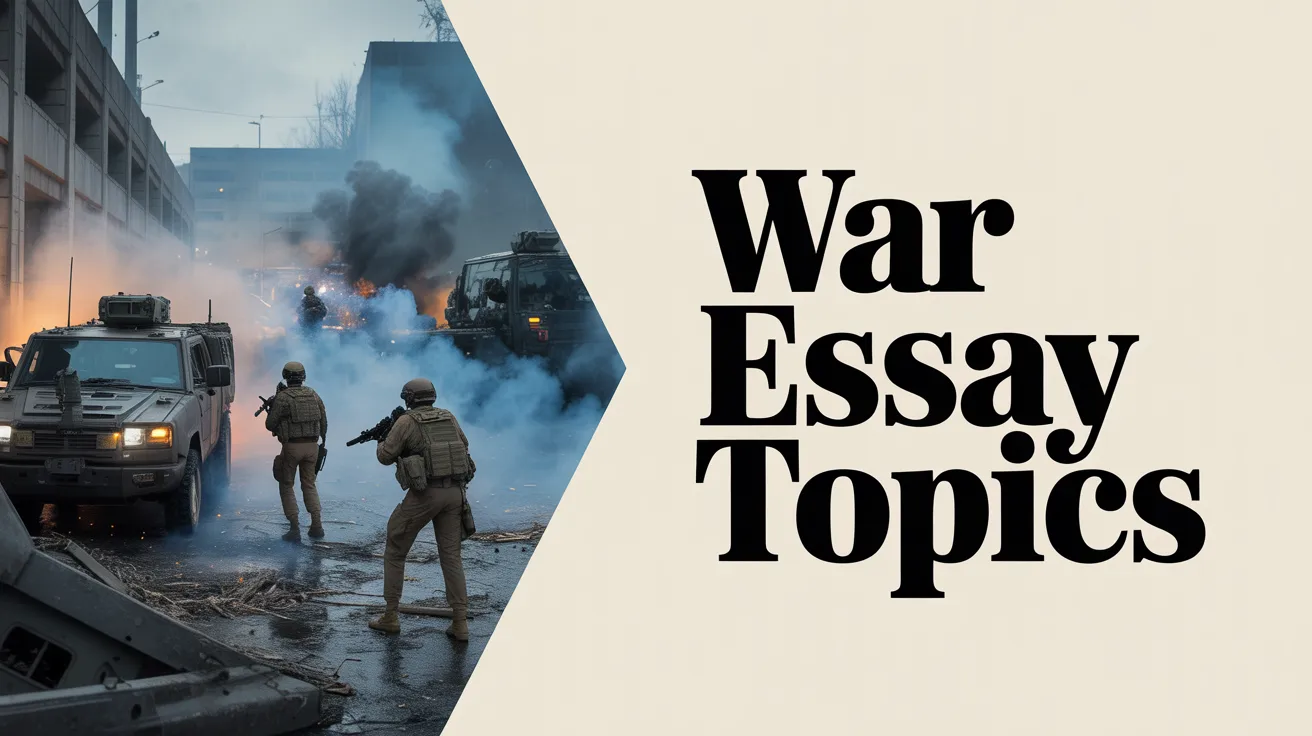
You are staring at a blank document, and the cursor is mocking you. It is 202,6 and the academic world has moved way beyond just listing dates of battles or names of generals. Your professor does not want a summary of the Gettysburg Address for the millionth time. They want you to show some actual critical thinking about how conflict reshapes the world we live in. And I get it. Finding that one perfect angle among thousands of possible war essay topics feels like trying to find a specific shell on a very crowded beach.
So yeah, you are probably feeling that specific type of academic burnout where every idea sounds boring or overdone. Whether you are looking at the American Civil War or the complex geopolitics of the 21st century, the goal is to find a prompt that lets you actually say something new. You need a topic that provides enough evidence to build a real argument but is narrow enough that you do not end up writing a five-hundred-page book by accident.
In real life, the best papers are not about the war itself. They are about the people, the motivation, and the consequences that ripple out for decades. We are going to look at everything from the ideological roots of the revolution to the high-tech reality of modern military conflict. Let me be honest. You do not need to be a military genius to write a great paper. You just need to be curious about why humans keep deciding that fighting is the answer.
Here is the weird part. Most students fail because they choose a topic that is too big. You cannot write a ten-page paper on World War II. You can, however, write a killer paper on the specific role of propaganda in the invasion of Poland. This list is designed to give you those specific, researchable angles that make your writing stand out.
Key Takeaways
- Effective war essays require shifting from general descriptions of combat to specific arguments about causality and long-term societal changes.
- Researching the American Civil War demands a focus on the intersection of legislative actions and the grassroots movement of abolitionism in the United States.
- Successful Cold War analysis depends on examining how ideological perception and propaganda shaped the tension between the Soviet Union and Western powers.
- Modern academic standards for research topics emphasize the legality of military intervention and the ethical horrors of war over simple tactical summaries.
- Strong thesis statements in history emerge when students connect specific military events to their broader impact on human motivation and collective social identity.
American Civil War and the Era of Secession
If you want to dig deep into this period, focusing on the specific tension between the Union Army and the Confederacy is a great starting point for your research. Sometimes,s looking at 70 unique history dissertation topics for history study can help you see how these broad historical movements translate into specific academic questions.
- The role of the federal government in the escalation of tensions leading to the secession of South Carolina in 1860.
- A comparative analysis of the industrial capacity of the North versus the agrarian economy of the Southern states in determining the outcome of the war.
- The impact of Harriet Beecher Stowe’s Uncle Tom’s Cabin on the Northern perception of the institution of slavery.
- How the concept of states’ rights was used as a legal shield for the preservation of slavery in the United States.
- The contribution of African American soldiers to the Union Army after the Emancipation Proclamation.
- An analysis of the political career of Jefferson Davis and his failure to maintain unity within the Confederate States of America.
- The psychological impact of the bloodiest battles of the Civil War on the civilian population in the American South.
- Legislation and the free negro. How laws regarding non-enslaved Black people shifted during the American Civil War.
- The effectiveness of the blockade of Southern ports in strangling the Confederacy’s ability to trade cotton for weapons.
- The American Civil War served as a testing ground for new technology like ironclad ships and telegraph communication.
- The influence of abolitionism in the United States on the diplomatic relations between the Union and the British Empire.
- A study of the internal political divisions within the border states that refused to join the secession movement.
- The long-term consequences of the war on the social structure of the American South during early Reconstruction.
- How the battles of the Civil War changed the way the United States viewed the legality of secession.
- The role of women as spies and nurses in the Union and Confederate armies and their impact on the course of the war.
Master Your War History Essay
Our specialized writers understand the nuance of military history and political theory. We can help you synthesize complex research into a clear, persuasive argument that stands out to your professors. Save time and reduce academic stress by collaborating with a historical expert on your next assignment.
World War I and the Great War Legacy
When you start looking at the Great War, you have to think about the sudden shift from 19th-century tactics to 20th-century science and destruction. If you are struggling with the formatting of these complex historical arguments, learning how to write a term paper APA style can save you a lot of stress during the editing phase.
- The failure of the Treaty of Versailles to address the underlying causes of the war and its role in the rise of the Nazi party.
- How the introduction of aircraft and tanks fundamentally changed the nature of land combat between 1914 and 1918.
- An analysis of the role of propaganda in Germany and the United Kingdom in maintaining public support for a prolonged military conflict.
- The impact of the Russian Revolution on the Eastern Front and the eventual exit of Russia from the war.
- The assassination of Archduke Franz Ferdinand served as a catalyst for a conflict that was already inevitable due to secret alliances.
- The horrors of war in the trenches. An analysis of the psychological trauma known as shell shock among returning soldiers.
- How World War I led to the collapse of the Ottoman Empire and the subsequent reshaping of the Middle East.
- The role of the United States in the final stages of the war and whether its military intervention was the deciding factor.
- A study of the naval arms race between Germany and Great Britain as a primary driver of pre-war tension.
- How the use of chemical weapons in World War I led to the first international efforts toward the legality of certain types of warfare.
- The changing role of women in the domestic workforce in Europe and America as a result of total war mobilization.
- The impact of the war on the global economy and the shift of financial power from London to New York.
- An analysis of the Gallipoli campaign and its lasting impact on Australian national identity and military history.
- How the Spanish Flu pandemic was exacerbated by the movements of soldiers and the conditions of the war.
- The concept of the lost generation. How the cultural output of the 1920s reflected the trauma of the Great War.
World War II and the Second World War Dynamics
Writing about the Second World War requires you to look beyond the battlefield and consider the massive shifts in society as a whole. You might find that Australian National Identity offers a unique perspective on how global conflicts force nations to redefine who they are in the aftermath of violence.
- The strategic importance of the invasion of Poland in 1939 and why it forced the hand of the Allied powers.
- How the Molotov-Ribbentrop Pact between Germany and the Soviet Union shifted the early balance of power in Europe.
- The role of intelligence and code-breaking, specifically the Enigma machine, in the Allied victory in the Atlantic.
- An analysis of the decision to use the atomic bomb on Hiroshima and Nagasaki from both a military and ethical perspective.
- The impact of the Holocaust on the post-war creation of the state of Israel and the modern concept of war crimes.
- How the Japanese attack on Pearl Harbor ended the isolationist policy of the United States and changed global geopolitics forever.
- The effectiveness of the resistance movements in occupied France and Eastern Europe in sabotaging the German war effort.
- A study of the Battle of Stalingrad is the definitive turning point on the Eastern Front.
- The role of propaganda in the United States. How films and posters were used to define the enemy for the American public.
- The economic mobilization of the United States and how it ended the Great Depression while fueling the war against Germany.
- The long-term consequences of the Potsdam Conference set the stage for the division of Germany and the Cold War.
- How the war accelerated the development of rocket science and jet engines, leading directly to the space race.
- The experience of African American soldiers in a segregated military and how the war influenced the early Civil Rights movement.
- An analysis of the air war over Britain and the psychological resilience of the civilian population during the Blitz.
- The role of the United Nations in the immediate post-war period and its goal of preventing a third global conflict.
Need a Custom Essay?
Our expert writers can help you turn any of these topics into a polished, high-scoring paper that meets your specific requirements. We handle the research, formatting, and drafting so you can focus on your other classes. Our service ensures you receive a unique perspective on historical conflicts backed by academic sources.
The Cold War and Ideological Perception
This era is less about bullets and more about the mind, information, and the constant threat of nuclear annihilation. When researching the East, looking into the Cultural Revolution in China can help you see how internal politics in Asia played into the broader global struggle between communism and capitalism.
- The role of the Soviet Union in the establishment of the Warsaw Pact as a counterweight to NATO in Eastern Europe.
- An analysis of the Cuban Missile Crisis and how the perception of nuclear war influenced the decision-making of Kennedy and Khrushchev.
- The impact of the Prague Spring and the subsequent Warsaw Pact invasion of Czechoslovakia on the global image of socialism.
- How the policy of détente in the 1970s temporarily reduced tensions between the two superpowers before the Soviet invasion of Afghanistan.
- The role of Ronald Reagan in the final decade of the Cold War and his influence on the eventual collapse of the Soviet Union.
- A study of the Space Race as a form of non-military competition used to demonstrate the scientific superiority of each ideology.
- The significance of the Berlin Wall was both a physical barrier and a symbol of the ideological divide in Europe.
- How the Cold War influenced military intervention in Latin America and the support of anti-communist dictatorships.
- The impact of the Korean War on the permanence of the division between the North and South and its status as a proxy conflict.
- An analysis of the Red Scare in the United States and the role of McCarthyism in shaping domestic politics.
- How the development of the hydrogen bomb changed the concept of mutually assured destruction in the 1950s.
- The role of non-aligned nations in trying to navigate the geopolitics of the Cold War without taking sides.
- A study of the fall of the Berlin Wall and the internal economic factors that led to the disintegration of the Eastern Bloc.
- How the Cold War shaped the curriculum in American and Soviet schools to emphasize nationalism and scientific achievement.
- The influence of the Cold War on popular culture, from James Bond films to the rise of dystopian literature.
The Vietnam War and Post-Colonial Conflict
The Vietnam War remains one of the most controversial periods in US history because it forced a total re-evaluation of military conflict. If you are looking for a modern angle, consider how the Ethical Considerations of Big Data mirror the way information and surveillance were used during guerrilla warfare in Southeast Asia.
- The failure of the Domino Theory as a justification for prolonged military intervention in Vietnam.
- How the Tet Offensive served as a turning point in American public opinion, despite being a tactical military defeat for the North.
- An analysis of the role of television news in bringing the horrors of war into the living rooms of American families for the first time.
- The impact of the anti-war movement on the domestic politics of the United States and the eventual withdrawal of troops.
- How the use of Agent Orange and napalm created long-term environmental and health consequences for both soldiers and civilians.
- A study of the guerrilla tactics used by the Viet Cong and why the traditional military strength of the United States failed to counter them.
- The role of the Ho Chi Minh Trail in sustaining the insurgency in the South despite massive US aerial bombardment.
- An analysis of the Pentagon Papers and how they revealed the gap between government propaganda and the reality of the war.
- The lasting impact of the Vietnam War on the US military’s approach to future interventions and the creation of the volunteer army.
- How the war in Vietnam influenced the civil rights movement and the perception of racial inequality in the draft system.
- The role of neighboring countries like Laos and Cambodia in the conflict,t and the devastating impact of the secret bombing campaigns.
- A comparison of the French and American experiences in Indochina and why both powers failed to maintain control.
- The psychological toll of the war on returning veterans and the lack of social support systems in the 1970s.
- How the fall of Saigon in 1975 reshaped the geopolitical landscape of Southeast Asia for the second half of the 20th century.
- The role of the student protest movement in forcing a change in the national conversation about the ethics of the draft.
Modern Warfare and Ethical Dilemmas
In the current era, the definition of war is changing from physical battles to digital and economic ones. But here is the thing. The core reasons people fight—reason, perception, and power—stay the same.
- The legality of drone strikes in modern military conflict and the blurred lines between combatants and civilians.
- How cyber warfare has become a primary tool of geopolitics in the 21st century without the need for traditional invasion.
- The role of private military contractors in modern wars and the lack of legal accountability for their actions.
- An analysis of the war on terror and how it changed the concept of national security and individual privacy in the United States.
- The impact of social media and real-time information on the ability of governments to control the narrative during a conflict.
- A study of the ethics of autonomous weapons and whether a machine should ever have the power to make lethal decisions.
- How climate change is becoming a primary driver of modern armed conflict over resources like water and arable land.
- The role of the International Criminal Court in prosecuting modern war crimes and the challenges of enforcing global law.
- An analysis of the economic impact of sanctions as a form of non-lethal warfare in the modern era.
- How the rise of non-state actors like terrorist organizations has changed the traditional rules of engagement.
- The psychological impact of modern surveillance and information warfare on the mental health of civilian populations.
- A study of the role of energy resources, particularly oil and natural gas, in the military strategies of major world powers.
- How modern warfare has led to the largest global refugee crisis in history, and the strain on international aid systems.
- The effectiveness of modern peacekeeping missions in preventing the escalation of ethnic conflicts.
- The role of space as the next frontier for military competition and the development of anti-satellite technology.
Stuck on Your Thesis?
Our academic consultants can help you narrow down these war essay topics into a specific, debatable thesis statement that will impress your professor. We provide expert guidance on structuring your argument and selecting the most impactful evidence for your history paper. Let us help you transform a broad topic into a focused academic masterpiece.
At the end of the day, picking one of these war essay topics is just the first step. The real work happens when you start connecting the dots between a decision made in a government office and the actual impact it has on the ground. Whether you are looking at the abolitionism in the United States or the high-tech drone wars of today, you are essentially trying to understand the human condition under extreme pressure. There is no such thing as a boring war if you look closely enough at the people involved.
Understanding why these conflicts happen requires you to look at the intersection of science, politics, and the basic human motivation for power or survival. So, take a topic that actually interests you, even if it feels a little complicated at first. It is much easier to write two thousand words on something that makes you a little bit angry or curious than it is to write five hundred words on a topic that puts you to sleep. You have the prompts now. Go pick one that matters and show your professor that you can handle the complexity of history without getting lost in the dates.
War Essay Topic FAQs

With a student-centered approach, I create engaging and informative blog posts that tackle relevant topics for students. My content aims to equip students with the knowledge and tools they need to succeed academically and beyond.