You are sitting there staring at a blinking cursor while your coffee goes cold for the third time today. You have ten tabs open, but none of them feel like real information you can actually cite without your professor giving you that look. It is 2026, and the World Wide Web is bigger than ever, but somehow finding quality Research Resources feels harder than it was five years ago. And I get it.
Everything seems to be locked behind a subscription or hidden under a mountain of AI-generated junk that does not actually say anything. You need a specific academic journal or a peer-reviewed paper to back up your thesis, but all you are finding are blog posts and sponsored content. It is frustrating because you know the data is out there somewhere, but you just cannot seem to locate it without hitting a dead end.
But here is the thing. The best scholarship is not always on the first page of a standard search results list. There are entire worlds of digital library collections and academic databases that are designed specifically for what you are doing. We are talking about places where you can find a specific map from the 1800s or a full-text search of a medical dissertation without ever leaving your desk.
In real life, research is about knowing which doors to knock on. Whether you are looking for an interview transcript or a historic photograph, this guide is going to show you exactly where to find the high-grade academic resources that will make your bibliography look like it was written by a professional researcher. So yeah, let’s stop the endless scrolling and get to the good stuff.
The Search for the Perfect Source
Finding a reliable source is not just about typing a few words into a search bar and hoping for the best. It requires a bit of strategy to separate the random noise of the internet from the actual scholarly conversation. When you start conducting academic research,h you have to think like a detective looking for a specific document that proves your point.
- Start with your university library catalog to see what electronic resources they already pay for.
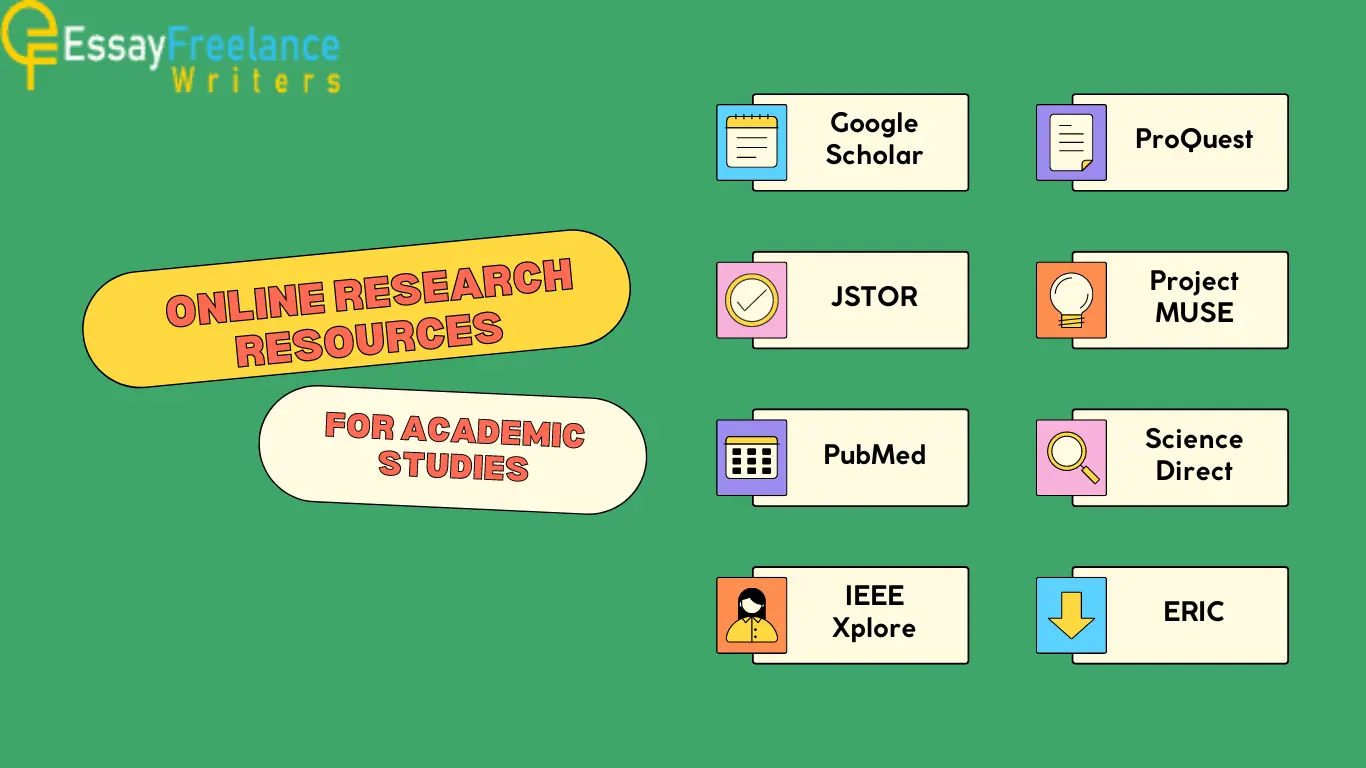
- Use a variety of research tools like Google Scholar and JSTOR to cover both broad and niche topics.
- Look for the Creative Commons license on a website to see if you can legally use and download the image or text for your project.
- Check the bibliography of a good article to find even more secondary sources that are already vetted by experts.
Breaking Down the Digital Library
We used to have to spend hours in a dusty archive to find a primary source, but now digitization has changed everything. Places like the Internet Archive and HathiTrust have turned millions of books and journals into an accessible digital library that anyone can use. If you need a specific ebook that is out of print or a recording of a speech from fifty years ago, these are the places to look.
The California Digital Library and the University of California libraries have paved the way for providing access to information that used to be restricted to faculty members. Now, a lot of that scholarship is available online for anyone with a laptop. You can find a scan of a historic document or a rare map that would have been impossible to see twenty years ago. It is not just about reading text anymore; it is about seeing the original paper and the ink as it appeared centuries ago.
The Power of Search Engines
Google Scholar remains one of the most powerful research databases because it indexes almost every academic publishing house in existence. But you have to know how to use it. If you just look at the titles, you might miss the full text that is hiding behind, a library link on the right side of the screen. Always check if your school has a collaboration with Google to bypass the paywall automatically.
Google Books is another massive resource for finding a specific chapter in a book you cannot afford to buy. While you might not get the whole book for free, you can often search for a keyword and find the exact page you need for your citation. It is a lifesaver when you are working on a deadline, and the physical library is closed. This kind of access to scholarly information makes the World Wide Web a lot more useful for students.
Primary Sources and Historic Archives
If you are writing about history or social science, you need primary sources. These are the raw materials of research, the first-hand accounts that haven’t been filtered through someone else’s opinion. Chronicling America is an amazing archive maintained by the Library of Congress that lets you search through millions of pages from a historic newspaper.
Need a Professional Hand?
Writing a research paper is a massive time sink. Let our expert writers handle the heavy lifting while you focus on what matters. We specialize in locating rare academic resources and building bulletproof arguments.
Using a database like this allows you to see how people in the past actually talked about events as they happened. You can find an old advertisement or a letter to the editor that provides context you just cannot get from a modern textbook. If your subject involves the arts, Artstor is an essential collection of images and photographs that are licensed for education. You can find high-resolution scans of paintings from almost any museum in the world.
Artstor and Visual Information
Research is not always about reading a journal article. Sometimes the best information comes from a visual source like a photograph or a technical drawing. Artstor provides access to millions of images that are categorized by subject and period. This is especially helpful if you are working on a project that requires you to analyze the visual culture of a specific era.
When you use these digital collections,s you are getting more than just an image. You are getting the metadata, the data about the data. This includes who created it, where it came from, and what the copyright status is. This makes it easy to cite your sources correctly and avoid any legal trouble with your publication. For students in 2026, this kind of diverse access to information is a total game-changer.
Science, Medicine, and Data Resources
For the science students out there, the search for Research Resources usually leads to PubMed and PubMed Central. These are the gold standards for finding medical and biological scholarship. Managed by a government agency in the United States,s these databases provide access to millions of abstracts and many full-text papers that are in the public domain or under a Creative Commons license.
- PubMed Central is specifically for open-access articles that do not require a subscription.
- ResearchGate allows you to follow a specific scholar and see their latest conference proceedings or pre-print papers.
- Science.gov is a gateway to over 60 databases and 2200 scientific websites from federal agencies.
- Data.gov provides raw data sets for those who want to do their own analysis for a thesis or dissertation.
Working with Raw Data and Performance Metrics
Sometimes you do not want an article that explains the data; you want the data itself. This is where things like Rukmini or specialized data repositories come in. If you are looking into the performance of a specific system, you need the raw numbers. For example,e if you were looking at the enhancement of Deliveroo’s website performance,e you would need actual technical metrics rather than just a magazine article about the company.
Analyzing data is a key part of modern scholarship. Whether you are looking at climate patterns or economic trends,s having access to the original dataset is crucial. Many academic journals now require researchers to publish their data alongside their paper. This makes it easier for you to verify their search results and even expand on their work in your own research. It’s about transparency and building on what others have done.
The Battle Against the Paywall
Let me be honest. The biggest hurdle in academic research is the paywall. It is incredibly annoying to find the perfect title for your subject, only to be told you need to pay $35 to read it. But the open access movement is slowly winning. More and more researchers are choosing to publish their work in an open-access journal so that anyone can read it for free.
When you find an article you want, always look for a version on ResearchGate or the author’s personal website. Often,n they have a version they are allowed to share, re even if the official journal version is restricted. You can also use tools like Unpaywall, which is a browser extension that searches the internet for a free legal version of any paper you are looking at. It saves a lot of headaches when you are trying to locate multiple sources quickly.
Stuck on Your Research?
Our team of academic experts can find the sources and write the paper for you. High quality and zero stress. We have access to elite journals and databases to ensure your work stands out.
Creative Commons and Sharing
Understanding the Creative Commons license is vital for modern students. Not all free information is free to use however you want. Some licenses allow you to share and adapt the work, while others require you to keep it exactly as it is. Always check the license before you include a scan or a recording in your final project. It is part of the ethical and social responsibilities we have as students and researchers.
Open access is not just about saving money. It is about the freedom of information. When scholarship is available to everyone,e it allows for more collaboration and faster progress in every field, ranging from medicine to literature. Many universities now have their own library collections dedicated to hosting open-access work from their faculty and students. This ensures that the information stays in the public domain and is not locked away by a massive publishing corporation.
The Role of the Librarian in 2026
In the age of AI and instant search results, you might think the librarian is a thing of the past. But here is the weird part. They are actually more important now than ever. A librarian is a professional who knows how to navigate the complex world of electronic information. They can help you find a niche database or a specialized archive that you would never find on your own.
- Ask your librarian about interlibrary loans if your school doesn’t have a specific book.
- Use the library’s chat feature for quick help with finding a digital document.
- Request a consultation for help with a complex thesis topic that requires primary sources.
- Check if the library has a specialized catalog for things like a map or a historic newspaper.
The importance of interdisciplinary collaboration cannot be overstated. Librarians often work across different departments to help students find Research Resources that bridge the gap between subjects. If you are writing about the intersection of science and art, you need someone who knows both the scientific databases and the art archives. They are the human connection in a world of digital search results.
Legal and Copyright Hurdles
When you are gathering all these articles and books,s it is easy to forget about the legal side of things. Copyright laws in the United States and around the world protect the work of creators for a long time. However, er once a work enters the public domain, ain you can use it however you want. This is why websites like Project Gutenberg are so great for finding classic literature.
If a work is not in the public domain, you usually have to rely on fair use for your research. This means you can quote a small part of a book or an academic journal as long as you cite it correctly. But you cannot just download a whole textbook and share it with your friends. That is a violation of the license. Always be careful with how you handle digital files to ensure you are following the rules of your university and the law.
Managing Your Collection
Once you have found your Research Resources, you need a way to organize them. There is nothing worse than finding the perfect quote and then losing the website where you found it. Use a research tool like Zotero or Mendeley to save your sources as you find them. These tools can automatically grab the title, author, and publication date,e which makes creating your bibliography a lot easier.
Having a clean catalog of your sources allows you to see the connections between different articles. You can see which authors are citing each other and who the major voices are in your subject. This is how you move from just finding information to actually doing a scholarship. It is about seeing the big picture and where your own ideas fit into the conversation.
Master Your Research
Finding high-quality sources is only half the battle; synthesizing them into a coherent argument requires advanced skills. Our professional editors and writers specialize in crafting impeccable papers that meet the highest scholarly standards. Let us help you succeed.
The real ending, I guess
At the end of the day,y your research is only as good as the stuff you put into it. You can be the best writer in the world, but if your arguments are based on flimsy blog posts and random websites, your paper is going to fall apart under scrutiny. Finding quality Research Resources is the heavy lifting of academic work. It is the part that takes the most time and causes the most stress, but it is also the part that makes your work actually mean something.
Take advantage of the fact that we live in an era where more information is available online than ever before. Use the digital library and the physical academic library. Talk to a librarian. Explore the archives and the data sets that other people are too lazy to look for. When you put in the effort to find the right source,s everything else becomes easier. The writing flows better because you actually have something to say. So take a break,th close those useless tabs, abs and go find the real scholarship that your project deserves. You’ve got this.
Check out our Essay writing FAQs if you need more tips on how to turn those sources into a finished paper.
Research Resources FAQs

With a deep understanding of the student experience, I craft blog content that resonates with young learners. My articles offer practical advice and actionable strategies to help students achieve a healthy and successful academic life.