
Plagiarism is one of the most common issues students, researchers, and even professional writers face. Sometimes it’s done on purpose, but often it happens without realizing it. This is called accidental plagiarism, and it can be just as damaging as deliberate plagiarism. That’s why learning how to prevent accidental plagiarism is important for anyone writing an essay, a research paper, or even a book. By paying attention to how we use information from others and learning simple strategies, we can avoid plagiarism and build trust in our work.
Key Takeaways
- Accidental plagiarism can be as damaging as deliberate plagiarism, making it important to develop habits that help avoid it from the very start of the writing process.
- Common causes of accidental plagiarism include forgetfulness, reliance on cut and paste, citation mistakes, language struggles, and time pressure, all of which can be prevented with careful planning.
- The consequences of plagiarism, whether accidental or not, can be severe, ranging from failed assignments and journal rejection to lasting damage to a writer’s academic reputation.
- To avoid plagiarism, writers should follow five key steps in order: take clear notes, paraphrase correctly, use quotation marks for direct quotes, cite sources properly, and check their work with reliable plagiarism detection tools.
- Maintaining academic integrity requires honesty, consistent attribution, and practical habits such as breaking tasks into smaller steps, keeping track of sources, and seeking support when needed.
What Accidental Plagiarism Really Means
Accidental plagiarism happens when a writer unintentionally uses someone else’s words or ideas without giving proper credit. This can occur for several reasons, such as forgetting to cite sources, paraphrasing too closely to the original text, or mixing their own thoughts with ideas of others without marking the difference.
Unlike deliberate plagiarism, which is a form of academic dishonesty where someone intentionally takes credit for someone else’s work, accidental plagiarism is usually the result of carelessness, lack of knowledge, or misunderstanding citation rules. For example, if you paraphrase a passage from Moby-Dick but don’t cite it, that may be seen as plagiarism, even if you didn’t mean to. Knowing how to reference a book in an essay is a necessary skill to prevent such oversights.
The academic world treats both accidental and deliberate plagiarism seriously. In many cases, accidental plagiarism occurs because a student or writer does not fully grasp how to use quotation marks, how to cite properly, or how much they can paraphrase without crossing the line.
Why Accidental Plagiarism Happens
There are several reasons why accidental plagiarism happens, and they’re often tied to small mistakes that could have been avoided:
- Forgetfulness: Sometimes during the writing process, we forget where a note or idea came from, especially when juggling multiple sources.
- Cut, copy, and paste habits: Over-reliance on copying text directly into a document increases the risk of plagiarism if those passages aren’t cited later.
- Citation confusion: Many students are unfamiliar with different citation styles, which leads to inconsistent citations or missed attributions.
- Language issues: Writers who are not confident in their language skills may unintentionally paraphrase too closely to the original source.
- Time pressure: Working on a paper at the last minute can lead to careless mistakes and missing citations.
A study published in the Journal of Academic Ethics (2020) revealed that more than 40% of plagiarism cases in academic publishing stemmed from inadvertent mistakes, such as inconsistent citations and failure to use quotation marks. This shows that while dishonesty is a concern, carelessness is just as risky.
The Consequences of Accidental Plagiarism
Even though it may be unintentional, plagiarism still carries consequences. In academic writing, plagiarism occurs when someone fails to give credit to the original source. Journal editors, instructors, and peers often take such cases seriously because academic integrity is at stake. Many student life articles highlight the long-term impact that a single mistake can have on a collegiate career.
Some possible consequences include:
- Lower grades or failed assignments – Even a single incident of plagiarism can affect academic performance.
- Rejection from journals – In academic publishing, journal editors may reject a paper outright if plagiarism is detected.
- Damage to reputation – Being accused of academic misconduct can harm trust between the writer and the academic community.
- Academic penalties – Some universities classify plagiarism, intentional or unintentional, as academic dishonesty and may impose suspensions.
For instance, a study in Science and Engineering Ethics (2018) highlighted that even accidental plagiarism happens often in research papers and is treated seriously during peer review. This shows that even when plagiarism is not deliberate, it can have long-lasting effects.
To avoid these risks, writers need strategies that will help them avoid accidentally plagiarizing while maintaining academic integrity.
How to Prevent Accidental Plagiarism
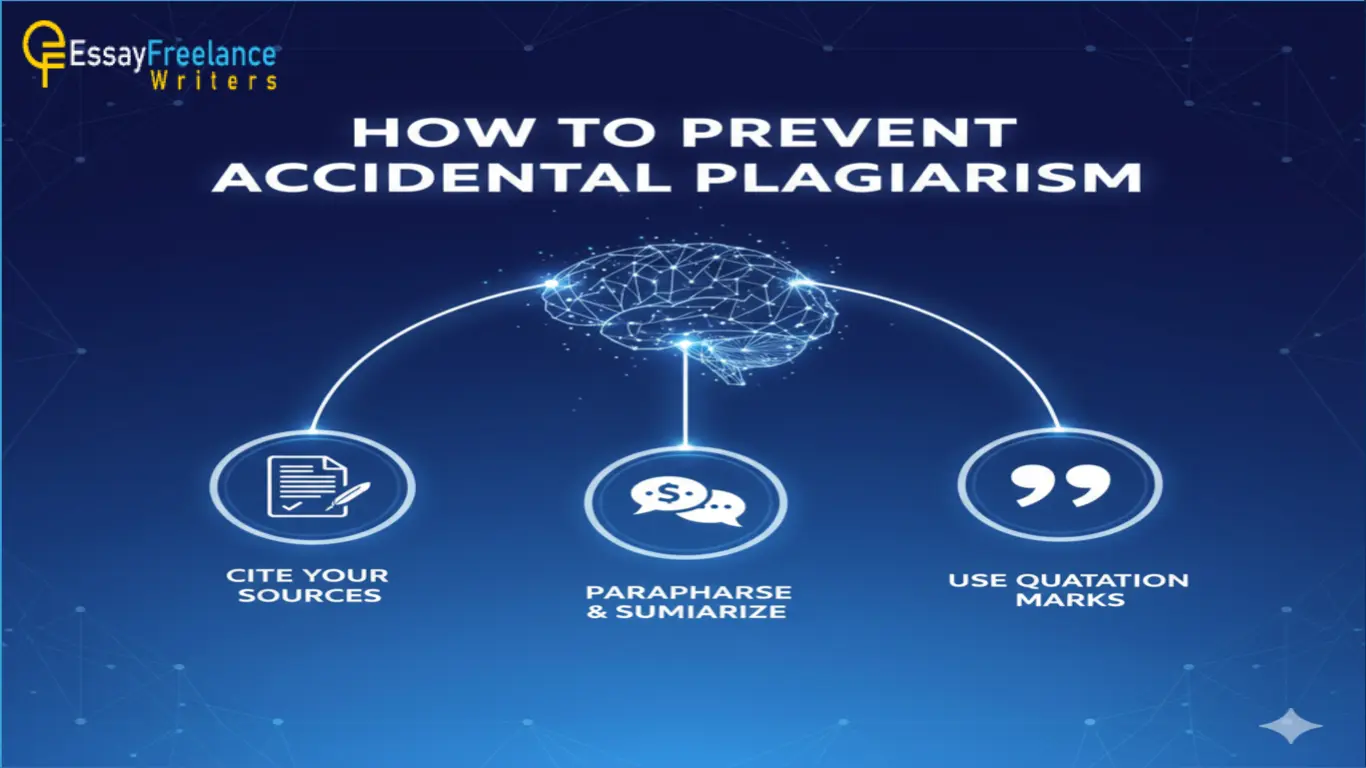
Learning how to prevent accidental plagiarism is not complicated. It comes down to building good habits in the writing process. Here are the most effective ways to do so, which we’ll go through in detail below:
- Take clear notes
- Paraphrase correctly
- Use quotation marks for direct quotes.
- Cite your sources properly.
- Check your work with tools.
1. Take Clear Notes
One of the first steps to avoid accidental plagiarism is keeping your notes organized. When researching, always mark down where each piece of information came from. Clearly separate your own thoughts from someone else’s words or ideas.
- Highlight or label direct quotes immediately, and add quotation marks so you won’t forget later.
- Keep a bibliography list as you go, rather than waiting until the end.
- Use a system, such as color coding, to mark which notes are paraphrases and which are direct quotes.
This habit reduces the risk of plagiarizing by accident because you’ll know exactly what needs attribution when you start writing your essay or paper.
2. Paraphrase Correctly
Paraphrasing is more than just swapping out words. It’s about fully rephrasing information into your own language and sentence structure, while still giving credit to the original source.
For example:
- Poor paraphrase (too close to the original text) → Seen as plagiarism.
- Proper paraphrase (new structure, new words, but same meaning with a citation) → Acceptable and honest.
Writers often unintentionally paraphrase too closely when they lack confidence in their language skills. A good practice is to read the original passage, put it aside, and then write the idea in your own words without looking at it. This helps avoid copying sentence structures directly.
3. Use Quotation Marks for Direct Quotes
Whenever you use someone else’s exact words, you must use quotation marks. This shows where your writing ends and the original source begins.
- Use quotation marks for direct quotes.
- Always include an in-text citation immediately after the quotation.
- Don’t overuse direct quotes; use them sparingly to support your points.
Without quotation marks, even short phrases copied directly from a source may be seen as plagiarism. This is why it’s essential to signal borrowed words clearly.
4. Cite Your Sources Properly
Proper citation is the backbone of academic writing. Different fields use different citation styles (APA, MLA, and Chicago), but they all have the same goal: to give credit where it is due.
- Always use an in-text citation when borrowing ideas, summaries, or direct quotes.
- Create a bibliography or works cited list at the end of your paper.
- Be consistent with whichever style you’re using.
If you find citations difficult, you can review this guide on How to Avoid Plagiarism, which explains citation rules in detail.
5. Check Your Work with Tools
Plagiarism checkers are valuable tools that can help writers identify risks of plagiarism before submission. Platforms like Turnitin or Grammarly scan your paper against millions of sources to detect overlaps.
- Run your document through a checker before turning it in.
- Review flagged passages and correct citations as needed.
- Use writing center resources or peer review to catch errors.
To learn more, check this helpful list of Plagiarism Checkers that can save you from careless mistakes.
The Role of Academic Integrity
At the heart of avoiding plagiarism lies academic integrity. Writers are expected to give credit for the work of others and avoid presenting someone else’s ideas as their own. Whether it’s an essay, a journal article, or a dissertation, integrity is what builds trust in the academic world.
It’s also worth noting that plagiarism is not limited to using someone else’s work. Self-plagiarism, where you reuse your own previous writing without citing it, also constitutes plagiarism. By practicing honesty and giving proper attribution, writers can protect themselves and contribute to a more reliable academic publishing environment.
Practical Tips to Avoid Accidental Plagiarism
Here are some everyday habits that can help you avoid accidentally plagiarizing:
- Break down your writing process into smaller steps, instead of rushing everything at once.
- Keep track of every source you use, whether it’s a journal article, book, or electronic source.
- Use a consistent method for citations throughout your document.
- When in doubt, cite the source; over-citing is safer than failing to cite.
- Seek help from your university’s writing center or use professional services like Essay Writing Service if you need extra support.
Conclusion
Accidental plagiarism happens more often than people realize, but it doesn’t have to happen to you. By learning how to prevent accidental plagiarism, you can avoid carelessness, protect your academic integrity, and give credit where it is due. With good habits like note-taking, correct paraphrasing, and consistent citation, you’ll feel more confident in your writing and ensure your work is trusted in the academic world. Readers can find additional resources for sharpening their skills by exploring our essay writing blog for updated guides.
How to Avoid Unintentional Plagiarism FAQ
.aagb_accordion_00f6eb73_0 .aagb__accordion_active .aagb__accordion_body {
border-top: 1px solid #ebebeb;
}
.aagb_accordion_00f6eb73_0 .aagb__accordion_container.wp-block-aab-accordion-item .aagb__accordion_head {
background-color: #bcb6b638;
border-top: none; border-right: none; border-bottom: none; border-left: none;
}
.aagb_accordion_00f6eb73_0 .aagb__accordion_container.wp-block-aab-accordion-item .aagb__accordion_body {
border-top: 1px solid #bcb6b638; border-right: none; border-bottom: none; border-left: none;
}
.aagb_accordion_00f6eb73_0 .wp-block-aab-accordion-item .aagb__accordion_subheading {
margin: 5px 0 0 0;
}
.aagb_accordion_00f6eb73_0 .wp-block-aab-accordion-item .aagb__accordion_icon {
}
.aagb_accordion_00f6eb73_0 .wp-block-aab-accordion-item .aagb__icon {
font-size: 23px;
}
.aagb_accordion_00f6eb73_0 .aagb__accordion_title {
margin: 0;
}
.aagb_accordion_00f6eb73_0 .aagb__accordion_container {
border: 1px solid #bcb6b638;
margin-top: 0px;
margin-bottom: 15px;
}
.aagb_accordion_00f6eb73_0 .aagb__accordion_number{
}
.aagb_accordion_00f6eb73_0 .wp-block-aab-accordion-item .aagb__accordion_subheading{
false
}
.aagb_accordion_00f6eb73_0 .aab-step-progress{
background-color: #dfd2d2;
}
.aagb_accordion_00f6eb73_0 .aab-step-progress-bar {
background-color: #1570ec;
}
.aagb_accordion_00f6eb73_0 .aagb__accordion_number{
}
.aagb_accordion_00f6eb73_0 .aab-progress-bar-container{
background-color: #f0f0f0;
}
.aagb_accordion_00f6eb73_0 .aab-progress-bar {
background-color: #0866ff;
}
.aagb__group_accordion_container.has_img {
flex-direction: row;
}
.aagb_accordion_00f6eb73_0 .aagb__accordion_container {
transition-duration: 0ms !important;
outline: 2px solid #00000000;
}
.aagb_accordion_00f6eb73_0 .aagb__accordion_container:focus-visible {
outline: 2px solid #C2DBFE;
}
What’s the difference between accidental plagiarism and intentional plagiarism?
Accidental plagiarism happens when someone unintentionally paraphrases, summarizes, or quotes without citing properly. Intentional plagiarism is when someone deliberately copies or uses the work of others without attribution.
Can you plagiarize yourself?
Yes, self-plagiarism occurs when a writer reuses their own work without citation. For example, submitting the same paper in two classes without mentioning it can be seen as academic misconduct.
How much can I paraphrase before it counts as plagiarism?
You must change both the wording and sentence structure significantly. Simply changing a few words is not enough. Always cite the original source, even when paraphrasing.
What tools are best to check for plagiarism before submitting a paper?
Turnitin is the most widely used tool in academic settings. Grammarly and other Plagiarism Checkers are also helpful in detecting risks of plagiarism.

With a passion for education and student empowerment, I create blog content that speaks directly to the needs and interests of students. From study hacks and productivity tips to career exploration and personal development