As a veteran writer and lover of academic writing, I’m excited to share my tips and strategies on How to Write a Profile Essay. Whether you’re a seasoned writer or a beginner tackling your first profile essay, this guide will provide the procedural knowledge and information you need to succeed.
A profile essay is a unique type of writing that allows you to delve into the life and experiences of a fascinating individual, place, or event. It’s a chance to share a descriptive and thought-provoking portrayal with your readers, giving them a deeper understanding and appreciation for your chosen subject.
In this article, we’ll explore the key steps and elements of writing a compelling profile essay, from choosing a subject to structuring your paper and using vivid descriptions. You’ll have the confidence and writing skills to create your successful profile essay by the end.
Key Takeaways
A profile essay involves delving into the life, experiences, and environment of a fascinating individual, place, or event, requiring detailed research and vivid descriptions to engage readers.
Key elements of a profile essay include an introduction to hook readers, background information on the subject, descriptive details, interviews and quotes, analysis and reflection, and a conclusion to summarize key points.
Choosing a compelling topic is crucial; it should be unique, interesting, and have a narrative that can engage readers, with ample accessible information for thorough research.
Structuring the essay logically, using an outline, and maintaining coherence between paragraphs through clear topic sentences and transitions are essential for effective communication.
Ethical considerations like respecting the subject's privacy and obtaining consent are important, as well as revising and polishing the essay to ensure accuracy and impact.
What are the Elements of a Profile Essay?
A profile essay typically comprises several key elements that combine to create a comprehensive and engaging portrayal of the subject. These elements include:
Introduction: This is your chance to hook your readers and provide an overview of your subject. Your thesis statement should be clear and concise, outlining the main focus of your essay.
Background Information: In the body of your essay, you’ll dive deeper into the context and history surrounding your subject, providing relevant details that give your readers a better understanding of the subject’s significance or unique qualities.
Descriptive Details: One of the hallmarks of a successful profile essay is the use of vivid descriptions and sensory details to bring your subject to life. Describe the subject’s appearance, personality, and environment in a way that engages your readers’ senses and imagination.
Interviews and Quotes: Incorporating direct quotes and anecdotes from your subject or other relevant individuals can add depth and authenticity to your profile essay, allowing your readers to experience the subject’s voice and perspective firsthand.
Analysis and Reflection: As you explore your subject, analyze and reflect on the significance or impact of the person, place, or event you’re profiling. This thoughtful approach will help your readers connect with your subject more deeply.
Conclusion: Your conclusion should summarize the key points of your essay and leave your readers with a lasting impression of your subject. This is your chance to restate your thesis and emphasize your profile’s unique qualities or importance.
Get a Stellar Profile Essay
Enhance your academic success with a professionally written profile essay. Our experts deliver well-researched, engaging, and plagiarism-free essays tailored to your needs. Place your order today for guaranteed excellence in writing.
The first step in writing a profile essay is to select a topic that piques your interest and can potentially captivate your readers. This could be a local celebrity, a historical figure, a unique place, or even an ordinary person with an extraordinary story.
Is this person, place, or event unique and interesting?
Does it have a compelling story or narrative that you can explore?
Will your readers find this subject to be relevant and impactful?
Can you access the necessary information and resources to write a thorough profile?
Remember, the subject of your profile essay should be more than just a surface-level description. Aim to uncover your chosen topic’s deeper and more complex aspects, shedding light on the nuances and unique perspectives that make it truly captivating.
Conducting Thorough Research
Once you’ve selected your subject, it’s time to dive into the research phase. This is where you’ll gather the information and details needed to craft a comprehensive and engaging profile essay.
If possible, start by conducting interviews with your subject. This direct experience will allow you to gain first-hand insights and capture the subject’s unique voice and mannerisms. Prepare a list of thoughtful questions to help you understand your subject more deeply.
In addition to interviews, supplement your research with reliable sources such as:
Academic and journalistic articles
Biographies, memoirs, or profile essays written about your subject
Photographs, videos, or other multimedia content
Historical records, census data, or other background information
As you gather your research, be sure to take detailed notes and organize your information to help you structure your essay effectively.
Structuring Your Profile Essay
With your research in hand, it’s time to begin structuring your profile essay. A well-organized essay will make your writing more cohesive and enjoyable to read and help you effectively communicate your thesis and main points to your readers.
The structure of a profile essay typically includes the following elements:
Introduction: This is your chance to hook your readers and provide an overview of your subject. Your thesis statement should be clear and concise, outlining the main focus of your essay.
Body Paragraphs: In the body of your essay, you’ll dive deeper into the various aspects of your subject. Use each paragraph to explore a different facet, using vivid descriptions, direct quotes, and anecdotes to bring your subject to life.
Conclusion: Your conclusion should summarize the key points of your essay and leave your readers with a lasting impression of your subject. This is your chance to restate your thesis and emphasize the significance or impact of your profile.
Maintaining a logical flow and coherence between your paragraphs as you structure your essay. Use transitional phrases and topic sentences to guide your readers seamlessly from one idea to the next.
Profile Essay Outline
To help you organize your thoughts and information, creating a profile essay outline before you begin writing is helpful. This outline will serve as a roadmap for your essay, ensuring that your ideas flow logically and your main points are communicated.
Here’s a sample profile essay outline to guide you:
I. Introduction
A. Hook: Grab your readers’ attention with an interesting or thought-provoking opening.
B. Thesis Statement: Clearly state your profile essay’s main focus and purpose.
C. Background Information: Provide relevant context about your subject.
II. Body Paragraphs
A. Paragraph 1: Describe the subject’s appearance, personality, and background. B. Paragraph 2: Explore the subject’s experiences, accomplishments, or unique qualities.
C. Paragraph 3: Delve into the significance or impact of your subject on their community or field.
D. Paragraph 4: Incorporate interviews, direct quotes, and anecdotes to humanize your subject.
E. Paragraph 5: Analyze and reflect on your subject’s deeper meaning or importance.
III. Conclusion
A. Restate Thesis: Summarize the main points of your profile essay.
B. Final Reflection: Leave your readers with a lasting impression of your subject’s significance.
C. Call to Action: Encourage your readers to explore or engage with your subject further.
Expert Help for Profile Essays
Achieve top-notch results with a custom profile essay created by our skilled writers. We ensure insightful content that captivates and informs. Click ORDER NOW for quality academic support.
Beginning a profile essay can be daunting, but with the right approach, you can craft an engaging and impactful introduction that sets the stage for the rest of your essay.
Here are some tips for starting your profile essay on a strong note:
Grab the Reader’s Attention: Use a compelling anecdote, quote, or description to hook your readers and pique their interest in your subject.
Provide Background Information: Give your readers context about your subject, including its significance, unique qualities, or relevance to your target audience.
Establish the Thesis: Clearly state your profile essay’s main focus or argument in a concise and compelling thesis statement.
Set the Tone: Consider the tone and style you want to convey in your essay, whether formal, conversational, or reflective.
Introduce the Subject: Provide a brief introduction to your subject, highlighting the key aspects you’ll explore in the body of your essay.
Organizing the Body Paragraphs
The body paragraphs of your profile essay are where you’ll explore the various aspects of your subject, using vivid descriptions, personal anecdotes, and insightful analysis to bring your subject to life.
When organizing your body paragraphs, consider the following strategies:
Chronological Order: Present your subject’s story chronologically, following their life or experiences from beginning to end.
Thematic Organization: Group your paragraphs around key themes or aspects of your subject, such as their achievements, personal life, or impact on their community.
Comparative Approach: Compare and contrast your subject with similar individuals, places, or events to highlight their unique qualities or significance.
Personalized Perspective: Incorporate your experiences, observations, and reflections to provide a unique perspective on your subject.
Regardless of your organizational approach, transition smoothly between paragraphs using clear topic sentences and transitional phrases. This will ensure that your essay flows logically and engages your readers throughout.
Writing a Strong Conclusion
The conclusion of your profile essay is your final opportunity to leave a lasting impression on your readers. It’s where you’ll summarize the key points of your essay and emphasize the significance or impact of your subject.
Here are some tips for crafting a strong conclusion:
Restate the Thesis: Revisit your original thesis statement and summarize the main points explored throughout your essay.
Emphasize the Significance: Discuss your subject’s broader significance or impact, highlighting how their story or experience is relevant to your readers.
Provide Final Reflections: Share your thoughts and insights about the meaning or importance of your subject, drawing connections to larger themes or issues.
Suggest Future Exploration: Encourage your readers to further explore your subject or consider the implications of your profile essay.
End with a Strong Closing: Conclude your essay with a powerful statement, quotation, or anecdote that leaves a lasting impression on your readers.
Crafting Vivid Descriptions
One of the hallmarks of a successful profile essay is the use of vivid descriptions and sensory details to bring your subject to life. Your goal is to paint your readers a rich and immersive picture, allowing them to experience your subject as if they were there themselves.
When describing your subject, consider the following elements:
Appearance: What does your subject look like? Provide detailed descriptions of their physical features, clothing, and mannerisms.
Personality: How would you characterize your subject’s temperament, emotions, and way of interacting with others?
Environment: What is the setting or context in which your subject exists? Describe the sights, sounds, and smells contributing to the atmosphere.
Dialogue: Incorporate direct quotes from your subject to capture their unique voice and speech patterns.
By weaving these descriptive elements throughout your essay, you’ll create a multidimensional portrait of your subject that engages your readers’ senses and imagination.
Ethical Considerations
When writing a profile essay, being mindful of the ethical implications surrounding your subject’s privacy and consent is important. As a writer, you must respect the autonomy and dignity of the individuals you profile.
Before beginning your research, be sure to obtain permission from your subjects to share their personal information and experiences. Clearly explain the purpose of your essay and how their story will be presented.
Additionally, be cautious when including potentially sensitive or controversial details about your subject. Weigh the value of the information against the potential for harm or invasion of privacy. When in doubt, err on the side of discretion and respect.
By upholding ethical standards in your writing, you’ll build trust with your subject and demonstrate your professionalism and integrity as a writer.
Perfect Your Profile Essay Now
Let us create a compelling profile essay that stands out. With thorough research and expert writing, we bring your ideas to life. Order today for unmatched academic assistance.
The final step in the writing process is to revise and polish your profile essay. This is your opportunity to refine your writing, correct errors, and ensure your essay is polished and ready for your readers.
Begin by proofreading your essay for spelling, grammar, or punctuation mistakes. Pay close attention to the flow and coherence of your writing, making adjustments to transition phrases and sentence structure as needed.
Next, consider the overall structure and organization of your essay. Are your main points communicated? Does your introduction effectively set the stage for your readers, and does your conclusion leave a lasting impression?
Finally, take a step back and evaluate the effectiveness of your descriptive language and storytelling. Does your essay engage your readers and convey the essence of your subject compellingly?
By dedicating time to the revision process, you’ll ensure your profile essay is polished, impactful, and reflects your writing abilities.
Dos and Don’t in Writing a Profile Essay
Before we dive into the specifics of profile essay writing, let’s establish some key dos and don’ts to keep in mind:
Dos:
Choose a unique and interesting subject that will captivate your readers
Conduct thorough research, including interviews and reliable sources
Use vivid descriptions and sensory details to bring your subject to life
Maintain ethical standards and respect your subject’s privacy and consent
Revise and polish your essay to ensure it’s well-organized and compelling
Don’ts:
Don’t choose a subject that lacks depth or complexity
Avoid unethical practices that could harm your subjects or violate their trust
Don’t neglect the revision process – take the time to proofread and refine your writing
Steer clear of generic or cliché descriptions that fail to engage your readers
Don’t forget to cite your sources and attribute any direct quotes or information
By keeping these dos and don’ts in mind, you’ll be well on your way to crafting a compelling and impactful profile essay.
Writing a profile essay is a rewarding experience that allows you to share your chosen subject’s unique stories and perspectives. By following the tips and strategies outlined in this guide, you’ll be well on your way to crafting a compelling and engaging profile essay that will captivate your readers.
Remember, the key to a successful profile essay lies in your attention to detail, commitment to thorough research, and ability to craft vivid descriptions that bring your subject to life. With practice and dedication, you’ll develop the writing skills and confidence needed to tackle any profile essay challenge that comes your way.
So, what are you waiting for? Start exploring the intriguing individuals, places, and events around you, and begin crafting your impactful profile essay today!
With a passion for helping students navigate their educational journey, I strive to create informative and relatable blog content. Whether it’s tackling exam stress, offering career guidance, or sharing effective study techniques
Writing a college essay can be daunting, especially when facing pressure to impress college admissions officers. With test scores and extracurriculars already on the table, the personal statement or college essay can be your chance to stand out and truly showcase your unique personality and experiences. Whether you are working on your common app essay or a supplemental essay for a specific college, it’s important to know how to write a college essay that will catch the eye of the admissions counsellor. In this article, we will discuss the importance of the college essay, explore college essay examples, and learn how to write a personal essay that will leave a lasting impression. From choosing the right college essay topic to crafting a compelling personal statement, we will cover everything you need to know to create a standout college application essay. So, if you’re ready to learn the college application process that truly represents who you are, keep reading to learn how to write a college essay that will make an impact.
Key Takeaways
The college essay is a critical component of the application process, allowing students to showcase their unique personality and experiences.
Understanding and addressing the specific essay prompt is essential for crafting an effective college essay.
Brainstorming and outlining ideas can help organize thoughts and create a structured approach to writing.
A compelling introduction and cohesive body paragraphs are key to engaging the reader and effectively conveying ideas.
Editing and revising the essay, along with seeking feedback, are important steps to ensure clarity and coherence in your writing.
Learn How to Write a College Essay
In the competitive landscape of college admissions, a well-crafted essay can serve as a powerful tool for students to distinguish themselves. This guide will navigate you through the intricacies of crafting a compelling college essay, providing invaluable insights and examples along the way.
Step 1: Understanding the Prompt
Understanding the prompt is crucial when writing your college essay. The roadmap guides your writing and ensures you stay on topic. Here’s how to tackle it:
Read Carefully: Before diving into your essay, take the time to read the prompt thoroughly. Highlight keywords or phrases that indicate what the college is looking for in your response. This initial step sets the foundation for your entire essay.
Decipher the Prompt: Break down the prompt into smaller components to fully grasp its meaning. Identify the main question or prompt, as well as any additional instructions or requirements provided by the college. This ensures that you address all aspects of the prompt in your essay.
Stay Within Boundaries: While it’s tempting to veer off-topic or include unnecessary information, remember to stay within the parameters of the prompt. Colleges provide these prompts to elicit specific information from applicants, so straying too far from the topic may detract from your essay’s effectiveness.
Avoid Generic Responses: Generic or vague responses that don’t directly address the prompt are unlikely to impress admissions officers. Instead, focus on providing a clear, concise, and genuine response that showcases your unique experiences, perspectives, and qualities.
Tailor Your Response: Customize your essay to each college’s prompt, if applicable. While you may be applying to multiple schools, each may have different essay requirements or prompts. Tailoring your response to each college demonstrates your genuine interest and commitment to their institution.
Order Your College Essay Now
If you want a similar college essay, don’t hesitate! Place your order today by clicking the ORDER NOW button above, and receive expert writing assistance that is 100% plagiarism-free. Our team will deliver a customized paper tailored to your needs.
Reflect on a time when you faced a challenge, setback, or failure. How did it affect you, and what did you learn from the experience?
Describe a problem you’ve solved or would like to solve. It can be an intellectual challenge, a research query, an ethical dilemma—anything that is of personal importance, no matter the scale. Explain its significance to you and what steps you took or could be taken to identify a solution.
Discuss an accomplishment, event, or realization that sparked personal growth and a new understanding of yourself or others.
Share an essay on any topic of your choice. It can be one you’ve already written, one that responds to a different prompt, or one of your design.
Describe a topic, idea, or concept you find so engaging that it makes you lose all track of time. Why does it captivate you? What or who do you turn to when you want to learn more?
Step 2: Brainstorming and Outlining
Brainstorming and outlining are essential steps in the college essay writing process. They help you generate ideas and organize your thoughts before diving into the actual writing.
Here’s how to approach them effectively:
Brainstorming Strategies: Reflect on your experiences, interests, and values. Consider significant moments in your life, challenges you’ve overcome, or lessons you’ve learned. Read a sample essay on “Overcoming Challenges in a Difficult Course.” Freewrite or create a mind map to jot down ideas without judgment. Discussing your ideas with friends, family, or mentors can also provide valuable insights and inspiration.
Creating an Outline: Once you have a pool of ideas, it’s time to create an outline to structure your essay. Begin by identifying the main theme or message you want to convey. Then, outline the key points or arguments you’ll discuss in each section of your essay, such as the introduction, body paragraphs, and conclusion. Consider the flow of your essay and how each point connects to the overall narrative.
Organizing Thoughts: Use your outline to organize your thoughts and ensure a logical progression of ideas throughout your essay. Start with a compelling introduction that grabs the reader’s attention and clearly states your main thesis or argument. Then, develop your body paragraphs with supporting evidence, anecdotes, or examples that illustrate your points. Finally, craft a conclusion that reinforces your main message and leaves a lasting impression on the reader.
Structuring the Essay: Your outline is a roadmap for writing your essay. It helps you stay focused and prevents you from going off on tangents. Follow your outline closely as you write, but don’t be afraid to adjust or reorganize sections as needed. Remember to maintain coherence and clarity in your writing, ensuring that each paragraph flows smoothly into the next.
Step 3: Writing a Compelling Introduction
Crafting a Compelling Introduction
Crafting a compelling introduction sets the tone for your college essay and grabs the reader’s attention from the start, making it essential to get it right. Here’s how to make your introduction stand out:
Creative and Engaging Openings: Start your essay with a hook that draws the reader in and makes them eager to continue reading. This could be a vivid description, a thought-provoking question, a compelling quote, or an intriguing anecdote. For example, you might begin with a personal story highlighting a key theme or experience you’ll explore in your essay.
Importance of Grabbing Attention: Admissions officers read thousands of essays each year, so making yours memorable from the outset is crucial. An attention-grabbing introduction captures the reader’s interest and sets your essay apart from the competition. By starting strong, you demonstrate your ability to engage the reader and hold their attention for the duration of your essay.
Step 4: Develop the Body Paragraphs
Developing strong and cohesive body paragraphs is essential for conveying your ideas effectively in your college essay. Here’s how to make the most of this crucial section:
Tips for Strong Body Paragraphs: Each body paragraph should focus on a single main point or idea that contributes to your overall thesis or argument. Start by introducing the topic sentence, which states the paragraph’s main idea. Then, reinforce your argument by providing supporting evidence, such as personal experiences, anecdotes, or examples. Finally, wrap up the paragraph with a concluding sentence that ties everything together and transitions smoothly to the next point.
Using Personal Experiences and Anecdotes: Personal experiences and anecdotes are powerful tools for making your essay relatable and memorable. Share specific examples from your life that demonstrate the qualities or characteristics you want to highlight. Use concrete details to bring your story to life and engage the reader, whether it’s a significant challenge you’ve overcome, an accomplishment you’re proud of, or a formative experience that shaped your perspective.
Step 5: Emphasizing One’s Unique Qualities
Emphasizing your unique qualities in your college essay is key to making a memorable impression on admissions officers. Here’s how to effectively showcase what makes you stand out:
Importance of Showcasing Individuality: Admissions committees review thousands of essays each year, so it’s essential to demonstrate what sets you apart from other applicants. Take the opportunity to highlight your unique personality, experiences, and perspectives. Avoid generic or cliché responses and instead focus on sharing authentic insights into who you are as a person.
Highlighting Personal Achievements and Growth: Use your essay to showcase your achievements and growth over time. Reflect on challenges you’ve faced, accomplishments you’re proud of, and moments of self-discovery or transformation. Share specific examples that illustrate your resilience, determination, and capacity for growth. Admissions officers are interested in learning about your journey and how it has shaped you into who you are today.
Get Your Essay Today
Looking for a paper like this one? Place your order today by clicking the ORDER NOW button, and benefit from top-notch academic help that guarantees a plagiarism-free result. Our professional writers will ensure your essay meets all your requirements.
Concluding your college essay strongly is just as important as having a captivating introduction. Here are some strategies to ensure your conclusion leaves a lasting impression:
Crafting a Memorable Conclusion: Summarize your main points, reinforcing your central message or thesis. Avoid introducing new information or arguments in the conclusion; focus on providing closure and tying up loose ends. Consider revisiting a key anecdote or theme from your introduction to create a sense of cohesion and closure.
Leaving a Lasting Impression: Your conclusion is your final opportunity to make an impact on the reader, so make it count. Leave the reader with a thought-provoking statement, question, or reflection that encourages further contemplation. Consider the broader implications of your essay’s themes or ideas and challenge the reader to consider how they relate to their own lives or the world.
Step 7: Editing and Revising- Ask Others to Read Your Essay
Editing and revising your college essay is a crucial step in the writing process to ensure clarity and coherence. Here’s how to approach it effectively:
Importance of Revising for Clarity and Coherence: After completing your first draft, take the time to review and revise your essay for clarity and coherence. Look for any unclear or convoluted sentences, awkward phrasing, or inconsistencies in your argument. Clarify any ambiguous points and ensure that your ideas flow logically from one paragraph to the next. Revising your essay helps refine your message and ensures it resonates with the reader.
Utilizing Peer Feedback and Professional Editing Services: Seek feedback from peers, teachers, or mentors to gain fresh perspectives on your essay. Peer feedback can provide valuable insights into areas for improvement, such as grammar, structure, or content. Additionally, consider enlisting the help of professional editing services to polish your essay to perfection. Professional editors can offer expert advice and suggestions for enhancing your writing style, strengthening your arguments, and ensuring adherence to college application guidelines.
College Essay Examples
College Essay Examples
Explore our collection of college essay examples, College essay samples, and Common App essay examples, showcasing exemplary writing that has helped countless students secure admissions to their dream schools. These essays offer valuable insights into effective storytelling, personal reflection, and compelling narratives for the college application process.
A personal statement requires thoughtful consideration of one’s experiences, goals, and the traits that make them a unique candidate for the position or program they are applying to. Below is an example of a personal statement that can serve as a template or inspiration.
The University of Michigan supplemental essay delves into specific experiences, achievements, and aspirations that align with the university’s values and academic environment. It’s important to showcase your unique perspective and how you can contribute to the U-M community. Below is an example of such an essay.
Get expert help with your college essay from Essay Freelance Writers, the industry leader in academic writing services. Our team of experienced writers is dedicated to crafting compelling and personalized essays that showcase your unique qualities and experiences. Place your order today by clicking the ORDER NOW button above to access our professional writing assistance and secure your spot at your dream college.
Frequently Asked Questions on Writing a College Essay
How important are extracurricular activities in a college essay?
Extracurricular activities can provide meaningful experiences and showcase personal growth. When incorporated effectively, they can add depth to your college essay and demonstrate your commitment outside of academics.
What are the key components of a good college essay?
A good college essay should reflect your writing skills while offering personal growth insights. It should be well-structured, engaging, and aligned with the topic of your choice or college essay prompts.
What is the ideal length for a college essay?
Most college essays have a word limit, typically around 650 words. It’s important to convey your message within the specified word count while ensuring clarity and depth in your writing.
How can I ensure that my college essay stands out to admissions officers?
Avoid clichés and generic content; focus on a unique perspective or experience. Admissions officers read numerous essays, so presenting an original and genuine story can capture their attention.
Do colleges prefer essays on specific topics or a topic of your choice?
While some colleges may provide college essay prompts, others allow you to describe a topic of your choice. It’s essential to thoroughly understand the requirements of each college application and tailor your essay accordingly.
How can I seek help with an essay during the writing process?
Consider seeking guidance from teachers, counselors, or professional college essay advisors. Additionally, platforms such as Essayfreelancewriters.com offer college essay writing services.
With a passion for helping students navigate their educational journey, I strive to create informative and relatable blog content. Whether it’s tackling exam stress, offering career guidance, or sharing effective study techniques
Job interviews can be challenging for anyone, but for non-native English speakers, the process can feel especially daunting. The pressure to perform well while communicating in a second language often amplifies anxiety, making it difficult to showcase your true potential. However, with the right strategies and preparation, you can overcome these challenges and walk into your interview with confidence.
Key Takeaways
Anxiety significantly impacts non-native English speakers during job interviews, often reducing their ability to articulate thoughts clearly.
Building fluency through practice, including rehearsing common interview questions and utilizing resources like videos and podcasts, is crucial for success.
A strong understanding of the job role and industry-specific terminology helps candidates feel more confident and reduces anxiety.
Using simple and clear language during the interview is essential; candidates should avoid complex sentences and seek clarification when necessary.
Mock interviews and understanding cultural nuances can enhance confidence, while effective stress management techniques contribute to a calm interview experience.
Understanding the Impact of Anxiety on Job Interviews
Anxiety can hinder your ability to think clearly and articulate your thoughts, which is particularly problematic during job interviews. For non-native English speakers, this anxiety may stem from fears of mispronunciation, incorrect grammar, or misunderstanding the interviewer’s questions. However, reducing this anxiety is crucial for improving overall performance. By managing stress levels, you can enhance focus, communicate more effectively, and leave a positive impression. Studies show that candidates who approach interviews with confidence and calmness are more likely to succeed, regardless of language barriers.
Build Your Fluency Through Practice
Fluency in English is key to feeling more comfortable and confident during an interview. Practice is the most effective way to improve your language skills. Start by reviewing common interview questions and formulating answers that align with your experiences and strengths. Practice speaking these answers aloud, focusing on clarity and pronunciation. Consider recording yourself or rehearsing with a friend or mentor who can provide constructive feedback.
Watching English-language videos or listening to podcasts about job interviews can also be beneficial. These resources not only improve your listening skills but also expose you to professional vocabulary and phrases. Over time, this practice will help you feel more prepared to tackle an ESL job interview.
Focus on Understanding the Job Role
One of the best ways to reduce anxiety is to thoroughly understand the job role you are applying for. Review the job description and research the company to identify key responsibilities and expectations. Familiarise yourself with industry-specific terminology and phrases. This preparation ensures that you can answer questions confidently and demonstrate your knowledge about the position.
Additionally, having a strong understanding of the role allows you to anticipate potential questions and tailor your answers accordingly. Being well-prepared not only reduces anxiety but also shows the interviewer that you have taken the time to understand the company’s needs.
Use Simple and Clear Language
During the interview, it’s important to focus on communicating your ideas clearly. Avoid using overly complex sentences or jargon that might lead to confusion. Instead, aim for simple, straightforward language that conveys your points effectively. If you don’t understand a question, don’t hesitate to ask for clarification. Most interviewers appreciate when candidates take the time to ensure they fully understand the discussion.
Pausing to think before answering is another effective strategy. This allows you to organise your thoughts and deliver a more coherent response. Remember, it’s better to take a moment to gather your ideas than to rush and potentially make mistakes.
Leverage Mock Interviews
Mock interviews are a powerful tool for building confidence and reducing anxiety. Simulating the interview environment helps you become more comfortable with the process and familiarises you with the types of questions you might encounter. Seek out opportunities to practice with friends, mentors, or professional coaches who can offer feedback on your performance.
Online platforms also provide access to mock interviews tailored to non-native English speakers. These sessions often include feedback on pronunciation, grammar, and overall communication style, enabling you to refine your skills and build self-assurance.
Addressing Cultural Differences
Understanding cultural nuances in professional settings can also help you feel more at ease during an interview. For instance, in many English-speaking countries, maintaining eye contact, offering a firm handshake, and expressing enthusiasm are considered positive traits. Familiarising yourself with these norms can boost your confidence and help you make a good impression.
If you are unsure about cultural expectations, consider researching or asking colleagues who have experience in similar settings. Small adjustments to your behaviour can make a significant difference in how you are perceived by the interviewer.
The Importance of Managing Stress
Reducing anxiety before and during a job interview is essential for success. Stress can impair your ability to listen actively, respond thoughtfully, and showcase your qualifications effectively. Techniques such as deep breathing, mindfulness, and visualisation can help calm your nerves. Arriving early, dressing professionally, and having all necessary documents prepared can also contribute to a sense of control and readiness.
By managing stress, you create a more positive and composed mindset, enabling you to navigate even the most challenging questions with poise. This calm demeanour will not only enhance your performance but also leave a lasting impression on your interviewer.
Why Preparing for an ESL Job Interview Matters
Preparation is the foundation of a successful interview, particularly for non-native English speakers. It helps you anticipate challenges, refine your communication skills, and build confidence. Investing time in preparation demonstrates your commitment to the role and your willingness to overcome language barriers. Whether it’s practicing answers, learning industry-specific vocabulary, or rehearsing with a mentor, every effort contributes to a stronger performance during your esl job interview.
Overcoming job interview anxiety when English isn’t your first language is a challenge, but it is one that can be conquered with the right approach. By focusing on preparation, practicing fluency, and managing stress, you can turn a potentially intimidating experience into an opportunity to shine. Remember, every step you take to improve your skills and confidence brings you closer to achieving your career goals. With determination and effort, you can navigate the interview process successfully and secure the role you deserve.
With a passion for helping students navigate their educational journey, I strive to create informative and relatable blog content. Whether it’s tackling exam stress, offering career guidance, or sharing effective study techniques
Navigating the world of academic writing can sometimes feel like deciphering a secret code, but fear not – we’ve got your back when it comes to APA Citation. Think of it as the superhero toolkit for your essays and research papers. APA, or American Psychological Association, isn’t just about making your bibliography look fancy; it’s a set of guidelines that brings order to your academic universe—wondering how to give proper credit to your sources? APA Citation has the answer. It’s like the GPS for your paper – ensuring you don’t get lost in the jungle of citations. So, buckle up, and let’s take a friendly stroll through the essentials of APA Citation. Ready for the journey?
For a detailed breakdown of APA guidelines and how to implement them in your work, check out our APA 7th Edition Citation Style Guide.
Key Takeaways
APA (American Psychological Association) citation guidelines provide a structured way to give credit to sources in academic writing.
Key components of APA citations include the author's name, year of publication, title of the work, source type, and specific details like page numbers for direct quotes.
APA 7 has updates compared to APA 6, including not requiring the publisher's location and simplifying citation for sources with multiple authors.
In-text citations in APA format include the author's name and publication year, providing a mini timestamp for sources used.
APA citation generators are valuable tools that automate the citation process, making it easier for students and researchers to format their references correctly.
Fundamentals of an APA citation
Author’s Name – The Starting Point: In APA land, the author’s name is like the superhero of your citation. Every citation begins by giving credit where it’s due. So, ask yourself, “Who wrote this gem?” To better understand how APA format is applied to various research papers, refer to our Comprehensive Guide to APA Bibliography Writing (7th Edition).
Year of Publication – The Time Stamp: Next up, we time-stamp the wisdom. Check for the year of publication. It’s like putting a date on when the superhero swooped in to save the day.
Title of the Work – The Spotlight: The title of the work gets its moment in the spotlight. Whether it’s a book, article, or a web page, acknowledge the main act. It’s like saying, “Here’s the star of the show!”
Source Type – The Sidekick Details: Is it a book? A journal article? Or maybe a website? Identify the source type. Think of it as introducing the trusty sidekick that helped our superhero.
Page Number – The Exact Location: If you’re quoting directly, add the page number. It’s like giving directions to the exact spot where the superhero delivered that killer line.
Publication Manual 6th Edition vs 7th Edition
Publication Manual 6th Edition vs 7th Edition
Let’s dive into the world of APA style editions, where we compare the trusty APA 6 and the shiny new APA 7. It’s like comparing two versions of your favorite app – they both get the job done but with a few tweaks. Here’s the lowdown:
Author’s Name – Same Old, Same Old: In both APA 6 and APA 7, the author’s last name is crucial. It’s like the secret handshake of citations. So, if you’re citing a source, start with the author’s last name.
Quotation Marks – Keep It Simple: APA 6 and APA 7 stick to simplicity when it comes to quotation marks. Whether you’re quoting directly or adding some spice with paraphrasing, keep those quotes clear and straightforward—no need for fancy punctuation and acrobatics.
Free APA Citation Guides – Your Handy Companions: Whether you’re in the realm of APA 6 or APA 7, there are free APA citation guides available online. Think of them as your trusty sidekicks, providing quick references and examples when you’re in a citation jam.
Changes in APA 7 – What’s the Fuss? APA 7 introduced some cool updates. Now, you don’t need to include the publisher’s location for books – one less detail to worry about. Also, if there are more than 20 authors (wow, right?), you can list the first 19 and then add “et al.”
Adapting to APA 7 – The Smooth Transition: If you’ve been cruising with APA 6, transitioning to APA 7 is like updating your phone’s operating system – a few tweaks, but nothing too drastic. The basics remain the same; it’s just about staying in the citation loop.
A Short Guide to APA Format Citations
APA in-text citations
Have you ever wondered how to give credit to the source right in the middle of your sentence? That’s where APA in-text citations come in. Instead of using the author’s name and page number, like in MLA, APA uses the author’s name and the publication year. It’s like having a mini time stamp showing when the wisdom was dropped. For example, (Smith, 2022).
Now, you might wonder, “What if there’s no author?” No worries – use the first few words of the title in your citation. Simple, right?
APA in text citations
Title pages
“Do I need a title page in APA?” Yes, indeed. Your title page is like the cover of your academic book. Center your title, put your name below it, and your affiliation (usually your school) at the bottom. It’s like presenting your paper with a neat bow.
A quick tip: Always check your instructor’s preferences; some might want extra info, like the course and date.
Need help formatting your research paper? Explore our Research Paper Format guide for tips and templates.
Title pages
Reference list citation components
“What goes in the reference list?” Think of it like the hero credits at the end of a movie. It would be best if you had the author’s name, the publication year, the title of the work (in sentence case, not ALL CAPS), the source type (like a book or a journal), and for online sources, the URL. It’s like creating a recipe – each component adds its flavor.
For an in-depth guide to crafting accurate reference pages, visit our guide on APA Format.
Reference list citation components
Formatting the APA reference page
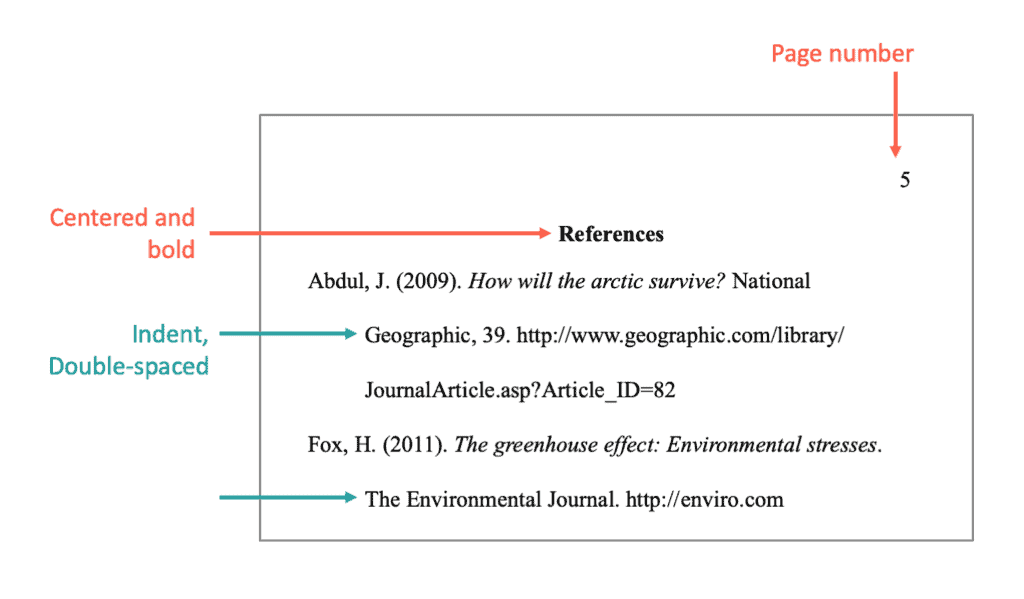
“How do I format the reference page?” Think of it as a well-organized party guest list. Start with “References” at the top, center it, and list your sources alphabetically by the author’s last name. Each entry has a hanging indent – it’s like the VIP section for each source.
“What about online sources?” Include the full URL. However, if it’s too long or complicated, you can use a free APA citation generator or a citation machine – it’s like a wizard doing the heavy lifting for you.
Formatting the APA reference page
How to Cite (Almost) Anything in APA Format
1. Books and Articles – The Classics:
First things first, when citing a book or an article in APA, you’ll need the author’s name, the publication year, the title of the work, and the source’s publication info. It’s like giving proper credit where it’s due – the basics never go out of style.
When citing a book, for instance, let’s say “The Great Gatsby” by F. Scott Fitzgerald, your APA citation would look like this: Fitzgerald, F. S. (Year of Publication). The Great Gatsby. City of Publication: Publisher.
An article, like “The Science of Sleep” by Matthew Walker, would be Walker, M. (Year of Publication). The Science of Sleep. Journal Title, Volume(Issue), Page range.
2. Websites and Online Gems:
Wondering about that awesome info you found online? For websites, APA wants the author’s name, the publication date (if available), the title of the page, the site’s name, and the URL. It’s like crafting a digital fingerprint for your sources – making sure your readers can trace your steps.
If you stumbled upon a fascinating article on the web, say “The Impact of Climate Change” from National Geographic, your APA citation would be National Geographic. (Year of Publication). The Impact of Climate Change. Retrieved from URL.
Author, A. (Year, Month, Day of Publication). Title of the Page. Website Name. URL
Yes, you can even cite that clever tweet or insightful Facebook post. Grab the author’s name, the post’s date, the text of the post, and the URL. It’s like acknowledging the wisdom even in the world of 280 characters.
Imagine you want to cite a tweet from Neil deGrasse Tyson: Tyson, N. d. (Year, Month Day). The insightful tweet text [Tweet]. Twitter. URL
Author, A. (Year, Month Day). Text of the Post. URL
What about citing a mind-blowing YouTube video or a thought-provoking podcast? For videos, note the creator’s name, the publication date, the title, and the URL. Podcasts are similar but include the episode title and podcast name. It’s like giving credit to the audio and visual storytellers.
For a YouTube video, such as “The Power of Vulnerability” by Brené Brown: Brown, B. (Year of Publication). The Power of Vulnerability [Video]. YouTube. URL
Creator, A. (Year, Month, Day of Publication). Title of the Video/Podcast. URL
Or a podcast episode like “How I Built This” – Airbnb with Brian Chesky: Chesky, B. (Year of Publication). How I Built This – Airbnb [Audio Podcast]. Podcast Name. URL
Had a conversation that holds the key to your paper? Citing interviews in APA involves noting the interviewee’s name, the type of interview (personal communication), and the date. It’s like putting a spotlight on valuable insights gained through conversation.
Suppose you had a personal interview with an expert, like Dr. Jane Goodall: Goodall, J. (Year, Month Day). Personal communication.
Interviewee, A. (Year, Month Day). Personal communication.
Example: Smith, J. (2023, January 20). Personal interview.
6. Government Documents – The Official Scoop:
Need to cite that crucial government document? Grab the author’s name (often the government agency), the publication date, the title, and the URL if it’s online. It’s like acknowledging the official word on the matter.
Citing a government report, let’s say “Climate Change Report 2022” from NASA: NASA. (Year of Publication). Climate Change Report 2022. Retrieved from URL
Government Agency. (Year of Publication). Title of the Document. URL
Even images get a nod in APA. For pictures, paintings, or any visual masterpiece, note the artist’s name, the year, the title, and the repository or website where it’s found. It’s like creating an art gallery of citations.
For a masterpiece like Leonardo da Vinci’s “Mona Lisa”: Da Vinci, L. (Year). Mona Lisa. Louvre Museum, Paris.
Artist, A. (Year). Title of the Image. Repository or Website.
Example: Monet, C. (1872). Impression, Sunrise. Musée Marmottan Monet, Paris.
Citing Media Sources in APA
When it comes to citing media sources in APA, you want to ensure your references are as clear as a well-shot film. Imagine you’re citing a YouTube video or a podcast episode; start with the creator’s name, followed by the publication date, the title of the video or episode, and the URL for online sources. It’s like directing your readers to the exact moment in the digital landscape where they can find the source. For instance, SciExploration. (2021, December 10). Journey to the Deep Sea. [URL]. This way, your citation is a precise guide for anyone wanting to explore the same media landscape.
Citing Additional Sources in APA
Beyond the traditional sources, there’s a whole world of information out there. Think interviews, government documents, and even social media. When citing an interview, grab the interviewee’s name, the type of interview (personal communication), and the date. For government documents, note the agency’s name, the publication year, the title, and the URL. Even a tweet or Facebook post can find its place in your references – use the author’s name, the post’s date, the text, and the URL. These unconventional sources follow the same full APA citation format, ensuring you credit and reference them properly in your paper—for example, Smith, J. (2023, January 20). Personal interview. Or Environmental Protection Agency. (2022). Climate Change Action Plan. [URL]. So, whether it’s a chat, an official document, or a social media gem, APA format has you covered.
🤔 What is an APA Citation Generator?
Are you wondering what this APA Citation Generator buzz is all about? Well, think of it as your digital citation sidekick, tirelessly working to make your academic life easier. An APA Citation Generator is an online tool that automates the process of creating citations in APA format. Instead of wrestling with the intricacies of punctuation and formatting, you input the necessary information – author’s name, publication year, title, etc. – and voila! It spits out a perfectly formatted citation ready to be inserted into your paper. Want a tool that makes citation creation effortless? Try our Free Citation Generator.
Using a free citation generator ensures your citations are accurate consistent, and adhere to the APA citation style without breaking a sweat. For example, imagine you’ve found a stellar article online. You plug in the details, and the generator hands you a flawlessly crafted citation ready to be showcased in your reference list.
👩🎓 Who uses an APA Citation Generator?
Are you curious about who benefits from the magic of an APA Citation Generator? Well, anyone navigating the labyrinth of academic writing, from students diligently crafting research papers to seasoned scholars managing a plethora of references. Suppose you’re aiming for that seamless APA title page and well-organized reference list without the headache of manual formatting. In that case, using the citation machine’s free citation generator is the way to go. It’s not just a tool; it’s a time-saver, ensuring you can focus on the substance of your work rather than sweating over commas and italics. So, whether you’re a high school student just getting the hang of citations or a seasoned researcher juggling multiple sources, check out our APA by using Citation Machine’s free citation generator – your shortcut to stress-free and accurate citations.
FAQs
How do I cite in APA format?
To cite in APA format, include the author’s name, publication year, title of the work, and source information. For in-text citations, use the author’s name and year, and for the reference list, follow the specific format for different sources.
How do you change references to APA style?
To change references to APA style, ensure each entry includes the author’s name, publication year, title, and source details. Adjust the formatting, such as using hanging indents and italics, to adhere to APA guidelines. If you’re looking for professional assistance with formatting, consider our APA Style Formatting Service.
How to write an APA bibliography?
To write an APA bibliography, list sources in alphabetical order by the author’s last name. Include the author’s name, publication year, title, and source information, formatted according to APA guidelines.
What is APA 7th style referencing?
APA 7th style referencing is the latest Edition of the APA style guide. It provides rules and conventions for citing sources in academic writing, offering guidelines for in-text citations, reference lists, and formatting. Check out our guide on APA 7th Edition Citation Style
With a passion for helping students navigate their educational journey, I strive to create informative and relatable blog content. Whether it’s tackling exam stress, offering career guidance, or sharing effective study techniques
The APA format, established by the American Psychological Association, is a widely recognized style used for academic writing, particularly in the social sciences. This article serves as a comprehensive guide to understanding the nuances of the APA format, with a particular focus on the 7th edition of the APA guidelines.
While many scholars may still be familiar with APA 6, the transition to APA 7 has introduced several key updates that enhance clarity and accessibility in scholarly communication. In this apa format guide, we will include the entire essential elements of the latest edition, from citation formats to paper structure, ensuring that writers can navigate these standards with confidence. Whether you’re a student, researcher, or instructor, mastering the APA format is crucial for effectively conveying your ideas and contributing to the academic community.
Join us as we delve into the specifics of APA 7 and its relevance in today’s academic landscape. For a detailed breakdown of the essential components and structure of a research paper, check out our Research paper format guide.
Key Takeaways
The APA format, established by the American Psychological Association, is a widely recognized academic writing style, especially in the social sciences, which emphasizes clarity and accessibility.
The transition from the 6th to the 7th edition of APA format introduces key updates such as title case for headings, the inclusion of up to 20 authors in citations, and new rules for the presentation of URLs.
In-text citations in APA format require the author's name and year of publication, while the reference list at the end must adhere to specific formatting rules to give credit to original sources.
APA paper formatting basics include creating a title page, maintaining 1-inch margins, using Times New Roman 12-point font, double-spacing, and including a page header with the title and page number.
Additional elements of APA format include proper structuring of headings, seriation (lists), the usage of footnotes and appendices, citing electronic and audiovisual sources, and creating visually appealing presentations.
What is APA Format?
APA Format, or the American Psychological Association style, is like the language of academic clarity – a set of guidelines ensuring that your ideas are expressed and structured in a way that makes them easily understandable. It’s the blueprint for creating well-organized and properly cited papers. APA Format covers everything from citing sources within your text using in-text citations, crafting a snazzy title page, and compiling a neat reference list. Think of it as your writing buddy, helping you navigate the sometimes perplexing waters of academic communication. So, whether you’re a high school student or a seasoned researcher, mastering APA Format is like having a secret weapon to communicate your thoughts with precision and professionalism.
Publication Manual 6th Edition vs 7th Edition
Navigating the transition from the 6th to the 7th ed of the APA Publication Manual is like upgrading to a new and improved tool kit for your academic endeavors. Let’s break down the key differences:
Title Case for Headings:
6th Edition: Heading titles were written in sentence case.
7th Edition: Headings now use title case, meaning you capitalize the first and major words.
Italicizing Book Titles:
6th Edition: Book titles and names of journals were italicized.
7th Edition: Only book and report titles are italicized; the names of journals, magazines, and newspapers are now in the title case and not italicized.
In-Text Citations for Multiple Authors:
6th Edition: Only the first author was mentioned for works with three or more authors, followed by “et al.”
7th Edition: Include up to 20 authors in the reference list, and in-text citations now include all the authors for sources with three or more contributors.
Digital Object Identifier (DOI):
6th Edition: Preferred the use of a DOI when available.
7th Edition: We still prefer the DOI, but if it is unavailable, include the direct URL.
Inclusion of Website URLs:
6th Edition: URL addresses were excluded from citations.
7th Edition: If no DOI is available, include the direct URL in your reference.
Seriation (Lists):
6th Edition: Used numbered lists for seriation.
7th Edition: Recommends using bulleted lists, especially for lists within a sentence.
Publisher Location:
6th Edition: Required the publisher’s location.
7th Edition: Omits the publisher’s location for books and includes only the publisher’s name.
Citation of a Chapter in an Edited Book:
6th Edition: The inclusion of the page range for the chapter was required.
7th Edition: Includes the page range for the chapter if it’s a direct quote but not for paraphrased information.
Place your order today by clicking the ORDER NOW button above for a custom-written academic paper on APA format. Our experts provide plagiarism-free content tailored to your needs. Don’t miss out on achieving academic excellence—order now!
In academic writing, APA citation is your superhero cape – it helps you give credit where it’s due and adds that extra layer of professionalism to your work. Let’s break down the basics:
In-Text Citations: APA style uses in-text citations, where you mention the author’s name and the year of publication within your text. For example, (Smith, 2021). Simple, right?
The Reference List: At the end of your paper, you create a reference list like the hero’s hall of fame, listing all the sources you’ve summoned. Follow a specific format: Author’s Last Name, Initial(s). (Year of publication). Title of work: Capital letter also for subtitle. Source.
Book Citation Example: Smith, J. (2021). The Art of Wonder. Academic Press.
Website Citation Example: Brown, A. (2020). The Science Blog. Retrieved from [URL]
No Author? No Problem: If there’s no author, use the first few words of the title. It’s like giving credit even when the hero’s identity is mysterious (“APA Citation Basics,” 2021).
Page Numbers for Direct Quotes: Add the page number to your in-text citation when quoting directly from a source. It’s like providing the exact location of the treasure in your paper (Smith, 2021, p. 45).
To master the art of accurate citations, visit our comprehensive guide on APA citation for detailed examples.
APA Paper Formatting Basics
Mastering formatting your APA paper is like creating a polished canvas for your ideas. Let’s delve into the essentials:
Title pages in APA Format
Title pages in APA Format 1
The initial step in presenting every student or professional paper is crafting a meticulous APA title page. This page holds paramount importance as it serves as the initial face of your work. To construct it correctly, ensure that the title of your paper takes center stage on this page, followed by your name and the name of your institution. Emphasize the title by italicizing it and, per APA format guidelines, capitalize the first word of the paper’s title. This meticulous detailing creates a professional and polished appearance, setting the stage for the reader’s engagement with your work. Remember, the text on the title page is a precursor to the intellectual journey your paper is about to unfold, making it imperative to establish a visually appealing and well-organized APA format title page. Don’t forget to carefully consider the arrangement of information on the page after the title page to maintain the continuity and professionalism of your document.
Page header
The page header, a mini roadmap to your paper, appears on every page. It includes the title of your paper in uppercase letters (up to 50 characters) and the page number. It’s like a friendly guide, ensuring your reader is never lost.
General paper length
Your length will vary depending on whether it’s a student or professional paper. Student papers are typically shorter, while professional papers can be more extensive. Always follow the guidelines outlined in the APA manual or your instructor’s specifications.
Margin sizes
Margins matter! APA guidelines suggest 1-inch margins on every side of the paper. It’s like providing a neat frame for your writing, keeping everything within clear boundaries.
APA Outline
Organizing your thoughts is crucial. Create a clear and concise outline using Roman numerals and letters. It’s like a roadmap for your paper, ensuring a smooth journey from introduction to conclusion.
APA Abstract
The abstract is a concise summary of your paper, not exceeding 250 words. It’s like a sneak peek, giving readers a glimpse of what’s to come.
The body of papers
Your paper’s main text should follow general format rules. Double-spacing, Times New Roman font, and 12-point size are your best allies. It’s like ensuring your message is clear, legible, and easy on the eyes.
In-text Citations
APA in text citations
When incorporating information directly from a source or rephrasing its content, using APA in-text citation guidelines is essential. This involves using quotation marks for verbatim quotes and parenthetical citations to acknowledge the source. Include the author’s name and the publication year within the parentheses in your written work. This attributes the information to its rightful originator and gives readers a clear trail to trace back to the source. Imagine it as a courteous nod to your sources amid an intellectual dialogue, ensuring the flow of information is respectful, transparent, and seamlessly integrated into your narrative (Smith, 2020).
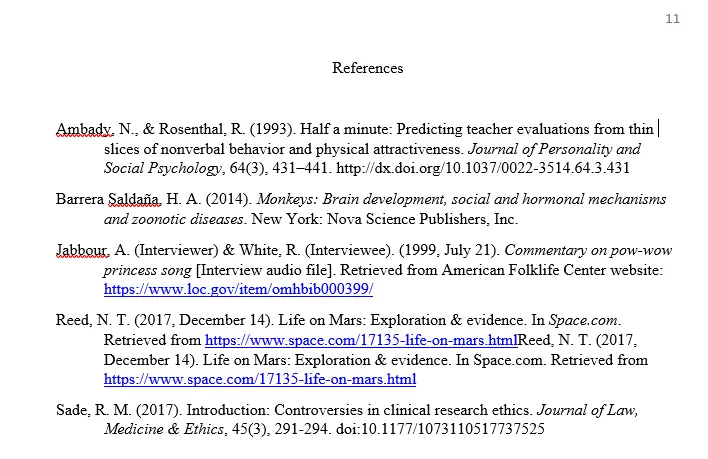
References page in APA Format
Your references page is brought to life at the end. List your sources alphabetically, following the general format provided in the APA manual. It’s like giving credit where credit is due, ensuring you honor the creators of the ideas woven into your paper.
Crafting a reference list in APA format is like assembling the cast for the credits of your academic production – each source plays a role, and the format ensures they get their rightful acknowledgment.
Reference List: Basic Rules:
Start your reference list on a new page at the end of your paper, and use a hanging indent for each entry. It’s like creating an organized guest list for your academic party.
Reference List: Author/Authors:
Please include the author’s last name, followed by their initials. If multiple authors exist, separate them with commas and use an ampersand (&) before the last author’s name. For example: Smith, J. & Johnson, A.
Reference List: Articles in Periodicals:
For articles in journals or magazines, include the author’s name, publication year, article title (in sentence case), the title of the journal or magazine in italics (title case), volume number in italics, and the page range. Example: Brown, M. (2021). “Unlocking the Secrets of Nature.” Science Today, 17(3), 45-56.
Reference List: Books:
Book references include the author’s name, publication year, book title (in italics, title case), and publication information. Example: Anderson, R. (2019). The Art of Exploration. Academic Press.
Reference List: Other Print Sources:
Other print sources, like newspapers or reports, follow a similar pattern: author’s name, publication year, title (in sentence case), and source details. Example: White, P. (2020). “Breaking News: Climate Change Impact.” Daily Globe, 6-7.
Reference List: Electronic Sources:
When citing online sources, include the author’s name, publication year, title (sentence case), and the URL. Example: Johnson, K. (2018). Digital Storytelling. Retrieved from [URL].
Reference List: Audiovisual Media:
For audiovisual sources, list the creator’s name, the year, title (italicized, title case), and format. Example: The Universe Unveiled (2017). Documentary.
Reference List: Other Non-Print Sources:
Non-print sources, like artworks or interviews, require the creator’s name, year, title (italicized, title case), and source details. Example: Smith, E. (2022). Art Beyond Borders. [Art Exhibition].
Legal References:
Legal references involve the title (italicized, title case), the publication year, and the source details. Example: Environmental Protection Act (2020).
Ace Your APA Paper Now
Struggling with APA formatting? Click the ORDER NOW button above to receive a professionally crafted, plagiarism-free academic paper. Let our experts guide you to success with a flawless, custom-written paper today!
Footnotes and appendices in your APA paper are like the backstage crew, ensuring a seamless performance. While APA style typically minimizes the use of footnotes, if you need to add extra information, they can be beneficial. Number your footnotes consecutively throughout the paper and keep them brief. Appendices, on the other hand, allow you to include supplementary material without cluttering the main text. Label them as Appendix A, B, etc., and provide a clear title for each. For instance, if your research includes a lengthy questionnaire, you might place it in Appendix A.
Numbers & Statistics
In APA formatting, numbers and statistics need rules to dance smoothly across your paper. Use numerals for numbers ten and above and spell out numbers below 10, except when referring to specific measurements. For statistics, reporting the correct values and considering the context is crucial. Provide means and standard deviations for normally distributed data, but consider using the median and interquartile range for skewed distributions. It’s like ensuring the numerical choreography in your paper is not just accurate but also contextually graceful.
Additional Resources
Sometimes, your paper needs to point readers to additional materials, where additional resources come into play. Include a separate section titled “Additional Resources,” where you list any materials you consulted but didn’t directly cite. This could be background readings, survey instruments, or data sets. It’s like offering your readers a treasure map for further exploration, guiding them to the sources that shaped your understanding.
Headings and seriation (lists) provide the organizational structure for your APA paper, much like a well-organized script. Use clear headings to delineate sections and subsections in your paper. Capitalize the first word of each heading, and use the title case. For lists, use bullet points or numbers for a clear sequence. For example, in a section discussing research methodologies, you might have a heading “Quantitative Approach” followed by a list of specific methods. It’s like creating a roadmap for your readers, ensuring they can easily follow your paper’s narrative.
APA PowerPoint Slide Presentation
Creating an APA PowerPoint Slide Presentation is like giving your audience a well-structured visual tour of your ideas. Follow the same principles as in a paper – include a title slide, headings in the title case, and bullet points for content. Ensure consistency in font and spacing throughout. For example, your title slide might include the title of your presentation, your name, and your affiliation, formatted like this:
Exploring the Depths: Understanding Oceanography
John A. Scientist
Department of Earth Sciences, Ocean University
APA Sample Paper
An APA Sample Paper is your blueprint, showing you how to set up your document with the right margins, font, and spacing. It’s like having a writing mentor guiding you through the intricacies of APA style. Check out the sample paper in the APA manual for an overview of how to structure your title page, headings, and reference list. Follow this example to ensure your paper aligns with APA guidelines.
Tables and Figures
Tables and figures in your APA paper are visual aids that bring your data to life, offering a clear snapshot of complex information. Each should have a clear title, and you should refer to them in your text to guide your reader. For instance, if you have a table comparing the growth rates of various plants, your text might say: “As shown in Table 1, the growth rates varied significantly among the plant species.”
Abbreviations
Abbreviations in APA writing should be sparingly defined upon first use in the text. This ensures your readers aren’t left decoding mysterious acronyms. For example, you might write: “The World Health Organization (WHO) recommends regular exercise for a healthy lifestyle. WHO guidelines suggest at least 150 minutes of moderate-intensity exercise per week.”
APA Classroom Poster
Crafting an APA Classroom Poster is like turning your research into a visual masterpiece. Organize your information logically, use clear headings, and present your findings with eye-catching graphics. A typical poster might include sections like Introduction, Methods, Results, and Conclusion. Remember to use font sizes that are readable from a distance and to include visual elements that enhance your message.
Get Your APA Paper Today
Ready to excel in APA style? Place your order today by clicking the ORDER NOW button above for a plagiarism-free, expertly crafted academic paper. We’re here to help you succeed—order now!
Writing in APA format involves structuring your paper with specific guidelines for title pages, headings, citations, and references. Follow the APA Publication Manual rules, covering aspects like font, spacing, and citation style.
What is an example of an APA format?
An example of APA format includes a title page with a centered title, your name, and your institution. In the main text, use in-text citations with the author’s name and publication year, and create a reference list with complete details of all cited sources.
How do I use APA format in Word?
To use APA format in Word, set the document’s margins to 1 inch, choose a readable font like Times New Roman, and double-space the entire document. Utilize the “References” tab for citations and bibliography, following the APA guidelines for in-text citations and the reference page.
How to do APA references?
To create APA references, list the author’s last name followed by initials, include the publication year in parentheses, italicize the title, and provide publication details. Ensure proper indentation and hanging format for each reference entry on the reference page.
With a passion for helping students navigate their educational journey, I strive to create informative and relatable blog content. Whether it’s tackling exam stress, offering career guidance, or sharing effective study techniques
This website uses cookies to improve your experience. We'll assume you're ok with this, but you can opt-out if you wish. ACCEPTPrivacy Policy
Privacy & Cookies Policy
Privacy Overview
This website uses cookies to improve your experience while you navigate through the website. Out of these cookies, the cookies that are categorized as necessary are stored on your browser as they are essential for the working of basic functionalities of the website. We also use third-party cookies that help us analyze and understand how you use this website. These cookies will be stored in your browser only with your consent. You also have the option to opt-out of these cookies. But opting out of some of these cookies may have an effect on your browsing experience.
Necessary cookies are absolutely essential for the website to function properly. This category only includes cookies that ensures basic functionalities and security features of the website. These cookies do not store any personal information.
Any cookies that may not be particularly necessary for the website to function and is used specifically to collect user personal data via analytics, ads, other embedded contents are termed as non-necessary cookies. It is mandatory to procure user consent prior to running these cookies on your website.

![How to Write a Profile Essay: Tips, Format & Examples [2026]](https://essayfreelancewriters.com/wp-content/uploads/How-to-Write-a-Profile-Essay-Tips-and-Examples-1080x675.webp)

![How to Write a College Essay (College Essay Examples Included) [2026]](https://essayfreelancewriters.com/wp-content/uploads/College-Essay-Tips-1080x675.webp)


![APA Citation Made Easy: Step-by-Step Guide With Examples [2026]](https://essayfreelancewriters.com/wp-content/uploads/APA-Citation-Guide-1080x675.webp)


![APA Format: A Comprehensive Guide for Students [2026]](https://essayfreelancewriters.com/wp-content/uploads/apa-format-1080x675.webp)