

Key Takeaways
- Set in the Great Depression, the novel uses a child’s perspective to expose a world filled with racial prejudice and social inequality where maintaining personal decency often comes at a high cost.
- The narrative follows the Finch children through a transition from playful curiosity about their reclusive neighbor to a harsh encounter with adult cruelty during a racially charged murder trial
- Atticus Finch serves as the moral center by teaching his children that empathy is a required discipline for survival and that real courage is fighting for what is right even when failure is certain.
- The story uses symbols like the mockingbird to represent the sin of destroying harmless innocence and the courtroom as a space where Maycomb’s surface-level rationality is stripped away by its underlying bias
- Harper Lee uses a conversational voice and first-person retrospective narration to show how ordinary people maintain social inequality while challenging readers to evaluate the fairness of their own communities.
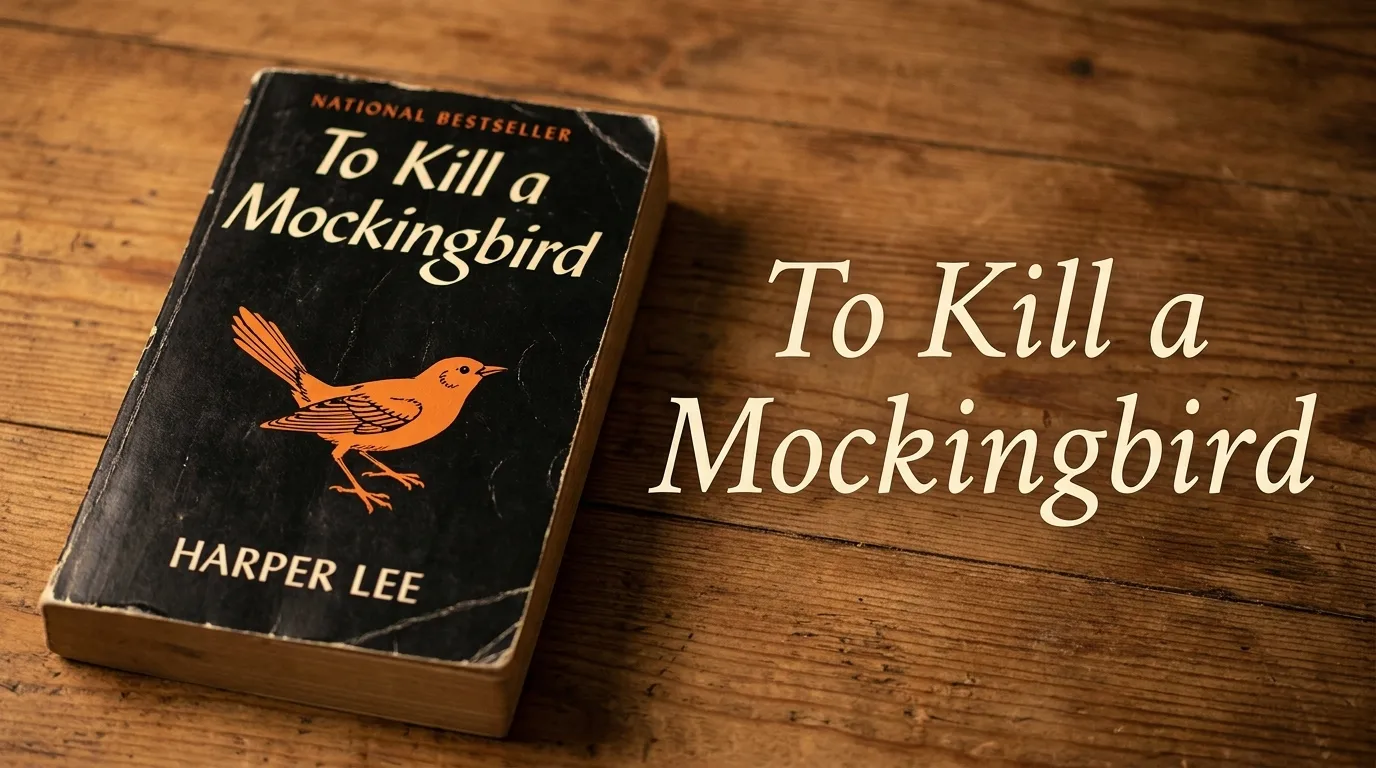
Harper Lee’s novel To Kill a Mockingbird is often deemed as an “important” book, which people tend to avoid discussing due to its sensitive themes. Set in a small town, Monroeville, Alabama, during the Great Depression, it presents a child’s perspective on a world rife with racism, prejudice, injustice, and quiet courage. The narrative appears straightforward at first glance – children playing, rumors circulating, a trial unfolding. However, beneath this simplicity lies a profound exploration of empathy, law, and the personal cost of maintaining decency in an unwelcoming community.
The book’s accolades include the Pulitzer Prize and, later, the Pulitzer Prize for Fiction, while Harper Lee was honored with the Presidential Medal of Freedom. It has become a cornerstone of American literature, frequently assigned in schools, debated by adults, praised by librarians, adapted into various formats, quoted extensively, and sometimes challenged for its language and racial epithets. For those seeking a concise summary devoid of fluff, this guide on how to write a summary of a book might be helpful.
Literature Book Overview
Published in 1960, To Kill a Mockingbird by Harper Lee is often categorized as a bildungsroman or coming-of-age story. The narrative is delivered through the eyes of Scout Finch as she reflects on her childhood in Maycomb, a town in the southern United States. Living with her brother Jem and their father Atticus Finch – a lawyer – along with their housekeeper Calpurnia, Scout’s summers are filled with adventures alongside their friend Dill. This friendship also sparks an obsession with Boo Radley, their reclusive neighbor.
Deepen Your Literary Analysis
Exploring the profound layers of Harper Lee’s classic requires a sharp eye for historical context and symbolic meaning. Our expert writers specialize in crafting nuanced literary critiques that highlight the intersection of justice and childhood innocence. Place your order today to receive a professionally written analysis that guarantees academic excellence.
Order Custom EssayThe story takes a dramatic turn in the second half as Atticus defends Tom Robinson, a black man wrongfully accused of assaulting Mayella Ewell, a white woman. This courtroom drama accentuates the stark contrast between childhood innocence and adult cruelty. It’s important to note that Harper Lee’s upbringing in Monroeville, Alabama, and her friendship with Truman Capote, who wrote In Cold Blood with Lee’s assistance for research, provide context to her writing. Furthermore, Lee’s editor, Tay Hohoff, significantly influenced the transformation of the manuscript into the celebrated novel we know today.
In addition to To Kill a Mockingbird, Harper Lee also published Go Set a Watchman, which added complexity to readers’ perceptions of Atticus Finch and the overall Finch mythos. For those interested in exploring more about literary analysis or related topics, such as literary research paper topics, there are numerous resources available online. Additionally, if you’re intrigued by courtroom dramas similar to To Kill a Mockingbird, you may find the analysis on 12 Angry Men insightful. Similarly, for readers interested in exploring themes of societal issues through allegorical narratives like Animal Farm, which is another significant piece of literature, check out our guide.
Spoiler-Free Summary
Scout and Jem Finch grow up in a small Alabama town, forming a summer friendship with Dill and spending years fixated on Boo Radley, a reclusive figure surrounded by gossip. Meanwhile, their father Atticus Finch takes on a case that puts their family in the town’s crosshairs, forcing Scout and Jem to learn, in real time, how prejudice operates and how the law can fail even when someone tries to do everything right. You get childhood adventures, moral lessons that actually sting, and a gradual shift from playful curiosity to dread as the adult world closes in.
Plot Summary
Scout Finch narrates several years of her childhood. Early chapters focus on games, school frustrations, and the Finch children’s fascination with Boo Radley. Boo becomes a sort of local legend, the subject of dares and spooky stories, but also an unseen presence that keeps brushing against their lives in small ways. As Scout and Jem grow, the tone changes. Atticus Finch is appointed to defend Tom Robinson, a black man accused of raping Mayella Ewell. The town’s racism is not subtle, and the Finch children absorb it from classmates, neighbors, and even extended family.
Scout struggles to understand why people who seem kind in daily life can be vicious about the trial. The trial reveals the power imbalance at the heart of Maycomb: social inequality, gender expectations, poverty, and racism all tangled up. Atticus presents a strong defense, exposing contradictions and hinting at what actually happened, but the jury’s decision shows the limits of justice in that setting. After the trial, the danger does not vanish. The Ewells, already unstable and angry, fixate on revenge. The story builds toward a final confrontation where Scout and Jem face real physical harm, and the meaning of Boo Radley shifts from rumor to reality. By the end, Scout has learned what Atticus has been trying to teach all along: you can understand people better when you try standing in their shoes. That is empathy, but it is also survival.
Master the Art of Character Study
Breaking down the moral evolution of Scout or the unshakeable integrity of Atticus requires a sophisticated grasp of narrative technique. Our PhD-level writers provide bespoke academic support to help you construct compelling arguments about character dynamics and thematic development. Order your custom literary guide now to secure a top grade with ease.
Get Expert HelpMain Characters
Scout (Jean Louise)
Scout is our lens. A child narrator is a big reason the book hits so hard. She tells the truth without polishing it. She notices hypocrisy. She doesn’t always understand what she’s seeing, which makes it feel real. Scout’s arc is about growing a conscience without losing her ability to question. It’s a bildungsroman in a messy, believable way. Not a neat moral lesson. More like a slow change in how she sees people.
Jem
Jem is older, and his innocence breaks in a more visible way. He believes in fairness until he can’t. The trial shatters him. If Scout is learning, Jem is grieving. That contrast matters.
Atticus Finch (Atticus Finch)
Atticus Finch is often treated like a moral icon in American literature. In the book, he’s a father, a lawyer, and a man trying to live with integrity inside a system he did not build. He teaches his kids that you “never really understand a person” until you consider things from their point of view. That line gets quoted constantly because it’s simple and it’s true. And because it’s hard to actually do.
Tom Robinson
Tom Robinson is compassionate, gentle, and trapped by racism. He is not written as perfect, but the story makes clear he is not guilty. The tragedy is that innocence doesn’t protect him.
Mayella Ewell (mayella ewell)
Mayella is one of the most complicated characters. She’s a white woman, but she’s also poor, abused, and isolated. She has power over Tom because of race, but she has almost no power in her own home. The book doesn’t excuse what she does. It shows how cruelty and fear can grow in a cage.
Bob Ewell
Bob Ewell represents violent entitlement. He’s humiliated by the trial, and he seeks revenge on the children. He’s also the type of man the town tolerates because he fits into the racial order.
Boo Radley
Boo Radley is the novel’s quiet center. A symbol, yes. But also a person. When Scout stands on Boo’s porch near the end and imagines the neighborhood from his perspective, it’s like the theme becomes physical.
Dill
Dill brings imagination and sensitivity. He also reacts strongly to injustice, especially during the trial, which is important. Dill’s discomfort shows that cruelty isn’t normal, even when a town treats it like it is.
Calpurnia
Calpurnia bridges Scout’s home and the Black community. She teaches, protects, and also lives with the tension of serving a white family while belonging to a segregated world. She complicates any simple reading of “good” and “bad” characters.
Character Analysis
Scout and Jem are not just “kids in a story.” Scout is a child, yes, but also a moral witness. Her confusion is the reader’s entry point, and her blunt honesty exposes adult hypocrisy. Jem is the one who still believes the town might do the right thing if the evidence is clear. That belief breaks, and you feel it. Atticus Finch is the novel’s moral center, but he is not written like a superhero. He is a father first, trying to raise children with decency in a place that punishes it. His courage is not about fists. It is about showing up, doing his job, and living with the consequences.
Dill functions like a spark. He pushes the games forward, asks the questions the Finch kids are afraid to ask, and reacts emotionally to the trial in a way that reveals how unnatural the town’s “normal” really is. Boo Radley is the most misunderstood figure in Maycomb. The town turns him into a monster because they cannot categorize him. But the book slowly reframes him as someone quiet, protective, and human. Tom Robinson is written with dignity, but his role also highlights how the story is about a community’s racism more than one person’s individual life. The injustice done to Tom is the clearest expression of what the town is. Mayella is complicated. She is not simply a villain or a victim. She is trapped by poverty, gender rules, her father’s control, and the town’s racial hierarchy. That does not excuse what happens, but it explains the pressure cooker she lives in.
Themes
Racism and racial injustice
This is the central theme, and it’s not subtle. Racism shapes the accusation, the trial, the verdict, and the aftermath. The book is set during the great depression, but economic hardship doesn’t erase racism. If anything, it intensifies scapegoating. When you write about racial injustice, focus on how the town’s certainty is built on social myths, not evidence. The conviction is a community decision. It is often argued that racism is taught casually in such environments.
Empathy
Empathy is taught, tested, and earned. Scout learns it with Boo. Atticus tries to practice it even with people he dislikes. The book shows empathy as a discipline, not a mood. A strong line to use here is “never really understand a person.” If you quote it, don’t just drop it. Explain how Scout proves it at the end. If you are looking for more detailed insights or guidance on summarizing these themes effectively in an essay format, consider exploring resources such as this comprehensive guide on how to write a summary of a book.
Courage
Courage in this book is not bravado. Atticus says real courage is when you know you’re going to lose, but you do it anyway. That ties directly to the trial. It also ties to Mrs. Dubose and addiction, which many students forget, but it matters because it teaches Jem what moral endurance looks like.
Law vs justice
Atticus believes in law, but the book shows the limit of legal systems in a society built on prejudice. The trial scenes are a case study in how procedure can look fair while outcomes are predetermined. If you want a clean thesis: the law is only as just as the people enforcing it.
Childhood vs adulthood
Part of the pain is watching children realize adults lie to themselves. Scout and Jem see that “respectable” people can do terrible things. That gap drives the whole book.
Gender and expectation
Scout is punished socially for not acting “like a lady.” Mayella is trapped by gender roles and poverty. Masculinity in Maycomb is tied to dominance and violence in characters like Bob Ewell. Meanwhile Atticus models a quieter version of manhood, which the town side eyes.
Symbols and Motifs
The mockingbird
The mockingbird symbolizes innocence that harms no one. The idea is simple: it’s a sin to destroy that kind of harmless goodness. Tom Robinson is a mockingbird figure. Boo Radley is also one. They’re both punished for being different, vulnerable, and useful as targets. Use the word mockingbird in your analysis, but be specific about who it represents and why.
The Radley house
At first, it’s fear. Later, it becomes protection. It reflects the kids’ changing perception. The house is less important than what they project onto it.
The courtroom
The courtroom is the “official story” space. It’s where Maycomb pretends to be rational. But it’s also where its prejudice is most exposed.
- Camellias and gifts: small objects that carry meaning, memory, and unspoken connection.
- Gossip as a motif: Maycomb runs on stories, and stories become verdicts.
Need a Complete Literary Breakdown?
Our professional writers can help you deconstruct the complex types of literary devices used by Harper Lee to create such an enduring classic. Whether you need a step-by-step guide or a full-length essay, we deliver high-quality work on even the tightest deadlines. Secure your academic future today by partnering with our trusted team of literature experts.
Get Help NowSetting and Context
Maycomb, Alabama, is fictional, but it feels rooted in real places like Monroeville, Alabama. The social structure is rigid: race, class, family name, and church all matter. The great depression deepens everything, making poverty more visible and more humiliating. This is the southern United States, and the “polite” surface often hides violence underneath, including the threat of lynching. The book’s cultural life is huge. It is read across the United States, taught in the United Kingdom, analyzed in literature courses, and constantly discussed in adult conversations about what counts as a classic and what should be taught. References to Montgomery, Alabama, and broader southern history hang in the background even when the town pretends it is separate from the world.
Writing Style and Language
Harper Lee writes in a conversational voice that feels like someone telling you what happened, then pausing to admit they did not understand it at the time. The prose is clean and observant, sometimes funny, sometimes suddenly blunt. Scout’s narration gives the book its bite, because childish honesty can make adult cruelty look even uglier. The language includes racial epithet usage that reflects the period and the town. That is part of why the novel is debated in schools and discussed by librarians and educators who have to decide how to teach it responsibly.
Literary Devices
Lee employs a variety of literary devices throughout the novel to enhance its depth and meaning:
- First-person retrospective narration: Scout tells the story with a mix of child immediacy and older reflection.
- Foreshadowing: early moments hint that the harmless games will lead to real danger.
- Irony: the town’s claims about morality clash with its actions.
- Symbolism: the mockingbird, Boo, and the courthouse carry layered meaning.
- Character contrast: Atticus versus Bob Ewell, compassion versus cruelty.
- Tone shift: playful childhood scenes slowly turn into a moral and physical threat.
Chapter Summaries
Chapter 1: Scout introduces Maycomb, the Finch family, and the legend of Boo Radley, tying everything to a childhood summer when Dill arrived, and curiosity became a kind of obsession.
Chapter 2: Scout starts school and realizes that formal education is not designed for her mind or her life, and the gap between “proper” behavior and real understanding starts to show.
Chapter 3: Scout faces conflicts at school and learns early lessons from Atticus about judging people fairly, while hints of the town’s class system creep in through small humiliations.
Chapter 4: The children find small gifts hidden near the Radley place, and the Boo Radley mystery turns from a scary rumor into something stranger, almost intimate.
Chapter 5: Scout spends time with Miss Maudie, who offers a more honest view of Boo and of Maycomb, while the children’s games keep pushing against boundaries.
Chapter 6: A night raid on the Radley yard goes wrong, and fear becomes real, forcing the kids to lie and improvise, and showing how danger can sit right inside a childish dare.
Chapter 7: Jem reacts strongly to changes around the Radley tree and grows quieter, and the gifts and gestures from the unseen neighbor begin to feel like communication.
Chapter 8: Winter comes unusually cold, the town gathers during a fire, and Scout realizes someone has been watching out for her, even if no one wants to say it out loud.
Chapter 9: Atticus agrees to defend Tom Robinson, and the Finch children begin taking heat from neighbors and family, especially as insults and prejudice become more open.
Chapter 10: Scout and Jem learn that Atticus’s calm is not weakness, and they see a different side of him, a controlled competence that ties into what courage really means.
Chapter 11: Scout fights someone who attacks Atticus’s character, then learns a harder lesson about restraint and the long view, especially after a neighbor’s cruelty forces reflection.
Chapter 12: Calpurnia takes the children to her church, and Scout sees the racial divide from a new perspective.
Key Quotes
- “You never really understand a person until you consider things from his point of view… until you climb into his skin and walk around in it”.
- “The one thing that doesn’t abide by majority rule is a person’s conscience”.
- “Shoot all the bluejays you want, if you can hit ’em, but remember it’s a sin to kill a mockingbird”.
- “Real courage is when you know you’re licked before you begin, but you begin anyway and see it through no matter what”.
Message / Author’s Purpose
Harper Lee is not writing a neutral history lesson. She is showing how racism and social inequality are maintained by ordinary people, not just villains. She is also arguing for empathy as a discipline, something you practice even when you do not want to. The book asks readers, adult and young alike, to notice how communities decide who counts as human, and how easily the law can become a tool of prejudice instead of justice.
Personal Review / Critical Opinion
What makes To Kill a Mockingbird endure is not the trial itself, even though it is the engine. It is the way the book captures how a child learns the rules of a town, then realizes those rules are cruel. The pacing is uneven in a human way. It wanders, then it snaps into focus. That is part of the charm and part of the pain. Still, it is worth saying out loud. This is a story centered on the Finch family’s experience, and Tom Robinson’s life is filtered through Scout’s narration. That limitation matters when people treat the book as the final word on racism. It is not. It is a doorway, not the whole room.
Who Should Read It
- Readers exploring American literature and classic literature for the first time.
- Anyone interested in a courtroom-centered novel about law, injustice, and moral courage.
- Adults revisit a book they read as a child because it lands differently later.
- Book club groups who want serious discussion about racism, prejudice, gender, and community complicity.
Discussion Questions
- What does Scout learn that Jem cannot accept, at least not right away?
- In what ways does Maycomb’s class system shape the trial before it even begins?
- Is Atticus Finch portrayed as realistic, idealized, or both?
- How does Dill function in the story beyond comic relief?
- What does Boo Radley symbolize early on, and what does he become by the end?
Related Books
- Go Set a Watchman by Harper Lee
- In Cold Blood by Truman Capote
- Native Son by Richard Wright
- The Color Purple by Alice Walker
- Beloved by Toni Morrison
- Just Mercy by Bryan Stevenson (nonfiction thematic match)
To Kill a Mockingbird FAQs
What is the central theme of Harper Lee’s novel To Kill a Mockingbird?
To Kill a Mockingbird explores profound themes such as racism, prejudice, injustice, empathy, and moral courage through the eyes of Scout Finch, a child growing up in a small Alabama town during the Great Depression.
How does To Kill a Mockingbird depict the trial of Tom Robinson?
The novel presents the trial of Tom Robinson, a black man falsely accused of assaulting Mayella Ewell, as a courtroom drama highlighting racial injustice and social inequality in Maycomb. Atticus Finch defends Tom with integrity despite facing community hostility.
Why is To Kill a Mockingbird considered an important work in American literature?
It is acclaimed for its courageous examination of sensitive themes like racism and morality, winning prestigious awards such as the Pulitzer Prize. The book has become a cornerstone of American literature, widely taught in schools and adapted into various formats.
What role does empathy play in To Kill a Mockingbird?
Empathy is central to the novel’s message. Through Scout’s experiences and Atticus’s teachings, readers learn that understanding others by ‘standing in their shoes’ is essential for personal growth and survival amid prejudice.

Through my engaging and informative blog posts, I aim to provide helpful tips on topics such as essay writing, research skills, and academic planning, empowering students to thrive in their academic pursuits.