Powered by ProofFactor - Social Proof Notifications
12 Angry Men (1957) Review, Themes, and Full Breakdown
12 Angry Men (1957) Review, Themes, and Full Breakdown

Key Takeaways

  1. The piece begins by grounding the reader in the film’s origins and structure, then moves from a broad spoiler-free setup into a more detailed progression of events that shows how a simple jury room scenario develops into a tense, idea-driven narrative.
  2. It builds depth by presenting the jurors as distinct personalities before examining how their beliefs, biases, and personal histories shape their behavior, making the conflict feel human rather than purely procedural.
  3. The article then expands into core ideas by tying themes, symbols, and setting together, showing how elements like space, heat, and dialogue reinforce the tension and reflect larger issues of justice, prejudice, and responsibility.
  4. Attention shifts to technique through writing style, language, and literary devices, alongside structured chapter-like breakdowns and key quotes that trace how the story escalates through argument, repetition, and shifting perspectives.
  5. It concludes by connecting purpose, critique, and audience, combining the author’s intent, a personal evaluation, reader suitability, discussion prompts, and related works to extend the conversation beyond the film itself.

Some movies age like a newspaper left in the rain. And then there’s Twelve Angry Men, the kind of tense cinema that somehow feels more current every time you revisit it. On paper, it sounds simple. A jury. A murder trial. A hot room. A lot of dialogue.

But in practice, 12 Angry Men 1957 is a pressure cooker about doubt, guilt, evidence, and the weird ways prejudice slips into “common sense.” It’s also one of those rare courtroom drama stories where the big action is thinking. Listening. Pausing. Changing your mind. Or refusing to. In 2026, when people argue in comment sections like it’s a competitive sport, this legal drama still lands because it’s about the hardest thing to do in public: be reasonable. Sit with reasonable doubt. Admit you might be wrong. And yes, it’s still thrilling.

Literature Book Overview

This is a film, but it’s also a cornerstone text. It started as a Reginald Rose teleplay, became a Reginald Rose screenplay, and then Sidney Lumet turned it into a masterpiece of containment and escalation. You can study it like literature because it basically is. Theme, motif, character study, rhetoric, and pacing. All right there.

The premise: a jury has to decide a verdict in a murder case. If they convict, a young defendant will be sentenced to death. If there’s an acquittal, he walks. The vote must be unanimous. One juror stands alone. The title is the movie. The whole movie is the title. It’s often listed alongside the Academy Awards era greats, and for good reason. It got multiple 12 Angry Men Academy Award nominations. It’s also a prime example of how a “small” film can feel huge. No chase scenes. No big sets. Mostly one room. Still, it plays like a thriller.

Analyze Character Complexity Like a Pro

Struggling to break down the heavy psychological themes of this cinematic masterpiece for your assignment? Our expert academic writers specialize in deep literary analysis and character studies that hit all the right notes for your professor. Get a perfectly structured paper today and move your grades from a hung jury to a unanimous A+.

Hire an Expert

Spoiler-Free Summary

Twelve jurors file into a jury room after hearing a murder case in New York City. Most of them are ready to wrap it up fast. It’s hot. They have jobs. Plans. Lives outside this room. An early vote suggests the outcome is basically decided. Then one juror says he isn’t sure. Not “the kid is innocent.” Just, “I’m not sure.” He wants to talk. He wants to look again at the evidence. And that single moment forces everyone else to either defend their certainty or admit they didn’t earn it. Over the next couple of hours, personalities clash, assumptions get exposed, and the room turns into a miniature United States, with all its pride and ugliness and stubbornness. It’s drama, but it’s also reason versus ego.

Plot Summary

After the closing arguments, the jury is sent to deliberate. The prosecutor has laid out a clean story: motive, opportunity, witnesses, and a weapon. The defendant is a teenager from a poor neighborhood, accused of killing his father. Inside the jury room, the initial vote is heavily tilted toward conviction. One dissenter, juror 8, played by Henry Fonda, argues the case deserves discussion because a human life is on the line.

What follows is a methodical breakdown of how decisions actually get made. Not just by evidence, but by mood, peer pressure, personal history, and prejudice. Arguments spiral. Tempers flare. People dig in, then soften, then dig in again. The process becomes less about “solving” a crime and more about whether a hung jury is a failure or a necessary safeguard. Whether doubt is weakness or responsibility. By the end, the room is changed. Not because someone delivers a magical speech, but because the group is forced to confront what “beyond a reasonable doubt” is supposed to mean in a trial.

Main Characters

There are no names in the film, which is part of the point. They are juror 1 through juror 12, a cross-section of working and middle-class men. Still, some stand out immediately:

  • Juror 8 (Henry Fonda): calm, patient, persistent
  • Juror 3 (Lee J. Cobb, sometimes searched as Reginald Cobb by people mixing names): aggressive, emotional, domineering
  • Juror 4 (Edward Binns): logical, controlled, “just the facts.”
  • Juror 10: openly bigoted, fueled by prejudice
  • Juror 11 (George Voskovec): immigrant perspective, values civic duty
  • Juror 9 (Joseph Sweeney): older man, observant, empathetic
  • Juror 5 (Jack Klugman): grew up in poverty, sensitive to assumptions
  • Juror 7 (Jack Warden): impatient, selfish, wants to leave
  • Juror 2 (John Fiedler): timid, easily pressured
  • Juror 6 (Ed Begley): steady, decent, protective
  • Juror 12 (Robert Webber): distracted, advertising mindset
  • Juror 1 (Martin Balsam): Foreman, trying to keep order

And yes, people often search “actor” because this cast is stacked. Even in a single room, each one feels like a full person.

The Verdict Is In: You Need Help!

Writing a legal or ethics essay requires more than just summarizing the plot of a film. Our legal scholars help you explore the deep nuances of the jury trial system with professional insights. Secure your academic future today by partnering with a writer who understands the weight of a well-crafted argument.

Order Now

Character Analysis

Juror 8 is not a superhero. That’s what makes him powerful. He doesn’t claim certainty. He models process. He asks questions. He slows the rush to judgment. In 2026, that reads almost radical. Juror 3, played by Lee J. Cobb, is the emotional engine. He’s not “the villain” in a cartoon way. He’s the warning. What happens when personal pain becomes a worldview, and you start using a courtroom to punish someone else for your own wounds?

Juror 4 (Edward Binns) is the kind of person many groups lean on. Calm. “Rational.” But the film shows that even rationality can be selective. Even logic can be lazy if it refuses to examine its starting assumptions. Juror 10 is the ugliest version of prejudice: loud, proud, and certain. What’s chilling is how familiar his style is, even now. The film doesn’t make him complex to excuse him. It shows how dangerous it is when a room tolerates him.

Juror 9 (Joseph Sweeney) might be the quiet heart. He sees things others miss, partly because he’s older and partly because he pays attention to people, not just arguments. And juror 5 (Jack Klugman) is crucial because he shows how class shame can silence someone. He knows things. He hesitates to say them because he doesn’t want to be reduced to where he came from. That’s the movie. People trapped in roles, trying to get free.

Themes

Reasonable doubt and moral responsibility
The phrase reasonable doubt is the spine of the story. The film asks: Is doubt a loophole, or is it the whole point of justice? It argues that the standard exists because certainty is easy to fake.

Prejudice as “common sense.”
The film treats prejudice like a contagion in a closed room. It spreads through jokes, assumptions, and “those people” language. This theme aligns with the idea explored in this article, which delves into how prejudice can dress up as practicality.

The fragility of democracy
A jury is a micro-democracy. One vote matters. Procedure matters. Listening matters. The film is basically saying: the jury system only works if regular people take it seriously.

Masculinity, pride, and ego
This is a room full of men who don’t want to be embarrassed. A lot of the conflict is about saving face. And that’s true in a trial, in politics, in families. Everywhere.

Symbols and Motifs

Heat and sweat
The jury room heat isn’t just weather. It’s psychological pressure. It raises tempers and lowers patience. When the weather shifts, the mood shifts too.

The table and the knife
Objects in the room become anchors for argument. They force the discussion to stay concrete. Evidence isn’t abstract when it’s in your hand.

Silence
Silence in Twelve Angry Men is a weapon. It’s also a verdict without words. When the room goes quiet, you can feel social power rearranging itself.

The window and the outside world
The outside world is there, but unreachable. That’s the point. Deliberation is isolation. You don’t get to poll your friends. You sit with your conscience.

Running Out of Time for Your Final?

Whether you’re analyzing cinematic techniques or the historical context of the American legal system, our writers deliver high-quality work on lightning-fast deadlines. We understand the pressure of the “hot room” and offer reliable support to ensure you never miss a submission. Order your custom essay now and breathe a sigh of relief.

Get Help Now

Setting and Context

The story takes place in a jury room in New York City, during a murder case that feels like mid-century urban America. It’s also deeply tied to the idea of civic duty in the United States, the belief that ordinary citizens can and must participate in justice by upholding the jury system.

The source is a teleplay, and you can feel that DNA. It’s built like a chamber piece. And when Sidney Lumet adapted it, he leaned into that claustrophobia. The camera slowly tightens, the room feels smaller, and the stakes feel bigger. Also worth noting: while people sometimes associate classic cinema with Hollywood, Los Angeles glamour, this film is almost anti-glamour. It’s sweat, cigarettes, irritation, and fluorescent light.

Writing Style and Language

Because it’s a Reginald Rose screenplay, the language is sharp, naturalistic, and constantly moving. Nobody talks like they’re delivering a TED talk. They interrupt. They repeat themselves. They get stuck. They perform with confidence they don’t fully have. The dialogue is the action. Not “witty” dialogue. Working speech. Argument speech. The kind of speech where someone reaches for words and grabs the wrong ones. And that’s why it still works in 2026. It doesn’t sound like a period piece. It sounds like people.

Literary Devices

Even though this is a film and a teleplay, it uses classic literary tools:

  • Foil characters: juror 8 vs juror 3, calm process vs emotional certainty
  • Irony: the “reasonable” men are sometimes unreasonable
  • Motif repetition: “I just want to go home” returns as moral shorthand
  • Rising tension: every vote is a plot beat
  • Limited setting: confinement heightens psychological conflict
  • Rhetorical questioning: the central weapon is the question, not the statement
  • Implied flashback: we don’t see the crime directly, but memory and reconstruction operate like a flashback in the mind, shaped by bias

It’s also crime fiction adjacent, even though it isn’t about chasing a killer. It’s about the story of a crime, and how stories can be wrong. One notable aspect of this narrative structure is its use of motifs, which serve as recurring elements that reinforce themes or ideas throughout the story.

Chapter Summaries

There aren’t literal chapters, but the film breaks cleanly into segments. Here’s a helpful way to track it without spoiling the specific turns:

Arrival and discomfort: the jury enters, settles, and postures
The jurors file into a cramped, overheated room carrying not only the weight of the case but also their individual personalities and biases. Initial interactions are marked by impatience, casual small talk, and a clear desire from many to conclude quickly. Some jurors assert dominance early through confidence or dismissiveness, while others remain quiet, observing the room before engaging. The atmosphere feels tense yet superficial, as most are more concerned with getting through the process than examining its seriousness.

The first vote: the room reveals its assumed conclusion
When the first vote is called, it becomes clear that the majority have already made up their minds, treating the decision as a formality rather than a responsibility. The near-unanimous initial outcome exposes how quickly assumptions have replaced deliberation. The vote is less about careful reasoning and more about convenience, signaling how easily groupthink can take hold when individuals prioritize speed over justice.

The first challenge: one juror asks to slow down and talk
One juror disrupts the momentum by refusing to conform to the quick verdict, not necessarily claiming certainty, but insisting on discussion. This moment shifts the tone of the room, introducing the idea that doubt, even slight, deserves attention. His calm insistence reframes the process from a rushed obligation into a moral duty, challenging others to reconsider whether they have truly examined the case.

Early fractures: impatience vs responsibility, logic vs dismissal
As discussion begins, divisions emerge between those who view deliberation as a burden and those who recognize its importance. Arguments surface that rely more on personal convenience or frustration than evidence, while others begin to question inconsistencies. The clash between emotional reactions and logical reasoning becomes more pronounced, exposing how differently each juror approaches the concept of justice.

Evidence under a microscope: small details become big questions
Seemingly minor elements of the case are reexamined with greater scrutiny, revealing that details once accepted as clear-cut may not be as reliable as they appeared. As each piece of evidence is dissected, uncertainty grows, and the narrative begins to shift. What was once considered straightforward becomes increasingly complex, demonstrating how critical thinking can transform understanding.

Personal stakes emerge: arguments stop being purely “about the case.”
The debate intensifies as jurors begin projecting their own experiences, frustrations, and biases onto the case. What started as a discussion about facts evolves into a confrontation shaped by personal histories and emotional triggers. This shift highlights how individual perspectives influence judgment, sometimes distorting objectivity and escalating conflict within the group.

Group dynamics shift: alliances change, pressure moves around the table
As doubts accumulate, the balance of influence in the room begins to change. Jurors who were once confident grow uncertain, while quieter voices gain strength. Alliances form and dissolve as individuals reassess their positions, and the pressure to conform shifts direction. The conversation becomes more dynamic, reflecting a gradual move away from initial assumptions toward deeper consideration.

The ugliest speech: prejudice becomes explicit, the room reacts
At a critical moment, one juror openly expresses prejudice, stripping away any pretense of impartial reasoning. His words expose the underlying biases that have influenced the discussion, forcing the others to confront the role of discrimination in their decision-making. The room’s reaction marks a turning point, as silence and rejection replace engagement, signaling a collective unwillingness to tolerate such views.

The final resistance: ego clings on after logic has moved
Despite the growing consensus, one juror continues to resist, driven less by evidence and more by pride and personal conviction. His arguments lose coherence as the weight of logic stands against him, yet he struggles to let go. This moment underscores how ego can obstruct truth, prolonging conflict even when the outcome has become clear.

Resolution: the verdict becomes possible, and the men exit differently than they entered
The final shift occurs as resistance gives way and a unanimous decision is reached, not through force, but through reflection and dialogue. The jurors, once eager to leave, now carry the quiet realization of what their responsibility truly meant. They exit the room changed—some humbled, some thoughtful—having moved from assumption to understanding through the difficult process of deliberation.

Key Quotes

  • “It’s not easy for me to raise my hand and send a boy off to die without talking about it first.”
  • “Prejudice always obscures the truth.”
  • “We have a reasonable doubt, and that’s something that’s very valuable in our system.”
  • “This is not a game.”
  • “You don’t really mean you’ll kill me, do you?”

The exact wording may vary depending on edition or transcription, but the intent is consistent. The language is plain. The impact isn’t.

Message / Author’s Purpose

Reginald Rose’s purpose feels blunt, in a good way. He’s defending the jury system while also warning how easily it can fail. He’s saying justice depends on ordinary people being willing to think, to doubt, to resist social pressure. And also, to face their own ugliness. Sidney Lumet’s direction tightens that message into something almost physical. You feel the room working on them. In 2026, when trust in institutions is shaky, and everyone thinks they’re the smartest person in the room, the film is basically a reminder: the system is only as good as the humans inside it.

Personal Review / Critical Opinion

I keep coming back to this movie because it respects the viewer. It doesn’t explain everything twice. It doesn’t spoon-feed emotion. It just lets the room do what rooms do. And the performances. Henry Fonda is the steady center, but the film belongs just as much to Lee J Cobb, whose anger feels terrifyingly real. Joseph Sweeney gives a kind of quiet grace. Jack Warden is the guy you want to shake. Ed Begley brings grounded decency. Edward Binns plays “logic” in a way that’s actually interesting, not smug. Martin Balsam is the stressed-out manager type who’s trying to keep it all from collapsing. John Fiedler is anxiety in human form. George Voskovec adds moral clarity without preaching. Robert Webber is a distraction personified. Jack Klugman is raw nerve.

It’s also one of those rare films where the lack of music is a feature. The soundtrack is chairs scraping and voices rising. If you want a modern comparison, it plays like a courtroom thriller without leaving the room. Like a high-stakes podcast argument, except it matters. And yes, it deserves its reputation. The Academy Awards’ attention makes sense, but honestly, the bigger award is that people still watch it and argue about it.

Who Should Read It

Watch it, read the screenplay, read the teleplay, whatever format you prefer. This is for:

  • Anyone who likes courtroom drama and legal drama
  • fans of crime and crime fiction who want the “after” part, not the chase
  • writers studying dialogue, pacing, or adaptation from teleplay to film
  • people who enjoy contained, tense drama that feels like a thriller
  • Anyone interested in how prejudice and group psychology work in real time
  • individuals seeking to understand legal terminology better, perhaps through a comprehensive legal glossary

If you want explosions, not here. If you want human beings under pressure, yes. Constantly.

Discussion Questions

  1. What does “reasonable” mean in reasonable doubt, and who gets to define it in the room?
  2. Which juror changes for intellectual reasons, and which changes for emotional reasons? Does it matter?
  3. How does prejudice show up in subtle forms before it becomes explicit?
  4. Is a hung jury a failure, or proof that the system is working?
  5. What role does masculinity play in how the men argue and refuse to back down?
  6. How does Sidney Lumet use the physical space to increase tension?
  7. What does the film suggest about the reliability of witnesses and “common sense” assumptions?

Related Books

If you like the moral pressure, the group dynamics, and the justice angle:

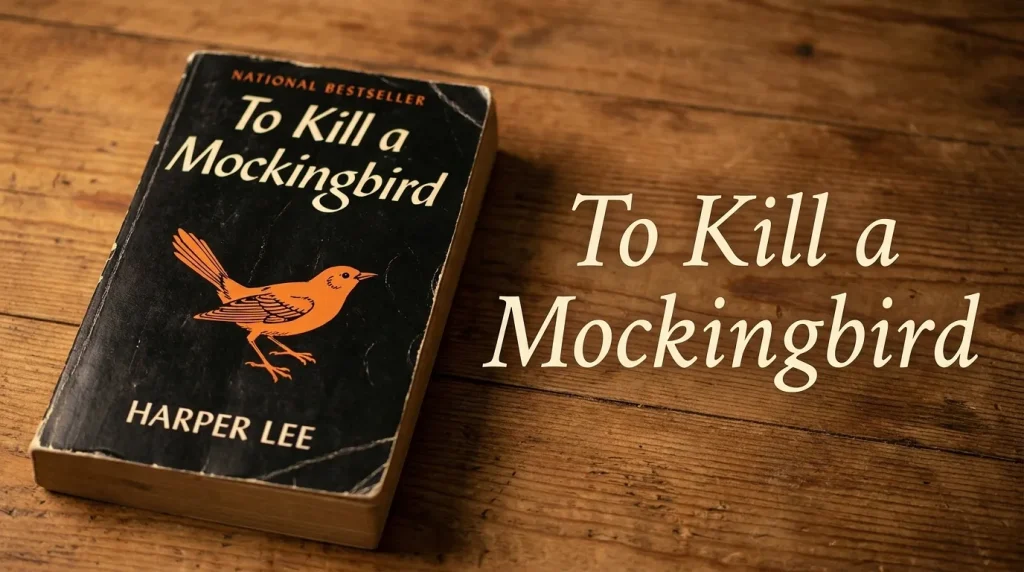
  • To Kill a Mockingbird by Harper Lee (trial, ethics, prejudice)
  • The Stranger by Albert Camus (justice system, judgment, alienation)
  • Native Son by Richard Wright (crime, society, the machinery around guilt)
  • In Cold Blood by Truman Capote (true crime style, moral complexity)
  • The Trial by Franz Kafka (system as nightmare, not logic)
  • A Time to Kill by John Grisham (courtroom drama with social tension)

And if you want more in-the-room intensity, read plays. The feeling is similar.


12 Angry Men FAQs

What is the main theme of the 1957 film ’12 Angry Men’?

The main theme of ’12 Angry Men’ revolves around doubt, guilt, evidence, and how prejudice can subtly influence what people consider ‘common sense.’ It explores the complexities of reasonable doubt and the challenge of being reasonable in public discourse.

How does ’12 Angry Men’ differ from typical courtroom dramas?

’12 Angry Men’ is unique because its central action is intellectual rather than physical. The film focuses on thinking, listening, pausing, and changing one’s mind within a confined jury room setting, making it a tense psychological thriller without chase scenes or big sets.

Who are the key jurors in ’12 Angry Men’ and what do they represent?

Key jurors include Juror 8 (Henry Fonda), who is calm and persistent in seeking truth; Juror 3 (Lee J. Cobb), who is emotional and domineering; Juror 4 (Edward Binns), logical and controlled; and Juror 10, who openly displays prejudice. Each represents different facets of human nature and societal attitudes influencing decision-making.

Why is ’12 Angry Men’ considered a masterpiece of containment and escalation?

Directed by Sidney Lumet, the film masterfully uses a single room to build tension through escalating conflicts among jurors. Its tight pacing, character development, and thematic depth turn a simple jury deliberation into a compelling drama that feels huge despite minimal settings.

What makes ’12 Angry Men’ relevant to audiences even today?

The film remains relevant because it tackles timeless issues like reasonable doubt, prejudice, peer pressure, and the courage to admit uncertainty. In an era where public arguments often lack reasonableness, ’12 Angry Men’ highlights the importance of thoughtful discourse and humility.

How does ’12 Angry Men’ portray the jury deliberation process?

’12 Angry Men’ depicts jury deliberation as a complex interplay of evidence evaluation, personal biases, moods, peer pressure, and civic responsibility. The film emphasizes that verdicts are not just about facts but also about human psychology and moral courage to uphold justice beyond a reasonable doubt.

5/5 - (5 votes)
Animal Farm: Summary, Plot, Characters, Analysis, Themes, Settings

Animal Farm: Summary, Plot, Characters, Analysis, Themes, Settings

Book Overview

  • Title: Animal Farm
  • Author: George Orwell
  • First published: 1945
  • Genre: Political satire, allegorical novella
  • Length: Short, usually around 100 to 140 pages depending on the edition

If you have heard people describe this book as “a story about animals” and nothing else, yeah. That is technically true. But it is also the kind of book that makes you pause mid page and go, wait. I know exactly who this is about.

It is fast to read, simple on the surface, and then it keeps unfolding in your head for days.

Struggling to decode the complex political allegories in your literature assignment? Our academic experts provide deep-dive analysis that guarantees top marks for your next paper. Let us handle the heavy lifting while you focus on what matters most.

Order Writing Help

Spoiler-Free Summary

Animal Farm is about a group of farm animals who overthrow their human owner and try to build a new society where everyone is equal and work is shared fairly. At first it feels hopeful and almost wholesome. Then power starts to concentrate, rules begin to shift, and the dream of equality gets rewritten in real time.

It is basically a cautionary tale about revolutions and what can happen after the cheering stops.

Plot Summary

The animals on Manor Farm are tired of being exploited by Mr. Jones, a drunk and negligent farmer. Inspired by the dream of an old pig named Old Major, they imagine a future where animals run the farm for themselves.

After Old Major dies, two pigs, Snowball and Napoleon, step up as leaders. The animals successfully rebel, chase Mr. Jones away, and rename the place Animal Farm. They create a set of principles called Animalism, meant to protect equality and fairness.

For a while, things improve. The animals work hard. Food is shared more fairly. There is pride in ownership. But the pigs begin taking privileges. A power struggle grows between Snowball, who is idealistic and organized, and Napoleon, who is quiet, strategic, and increasingly ruthless.

Eventually Napoleon removes Snowball by force and takes control. Over time, Napoleon and the pigs change the rules, rewrite history, punish dissent, and convince the other animals that sacrifices are necessary. The farm becomes what it was supposed to replace, except now the animals are being controlled by animals.

And the ending. It lands like a door closing.

Main Characters

  • Napoleon: A Berkshire boar who becomes the farm’s dictator.
  • Snowball: A pig and revolutionary leader, later exiled.
  • Old Major: The pig whose vision inspires the rebellion.
  • Boxer: A strong, loyal workhorse who believes in the cause.
  • Clover: A kind mare, more perceptive than she thinks she is.
  • Squealer: A pig who spreads propaganda and manipulates language.
  • Benjamin: A cynical donkey who sees what is happening but rarely acts.
  • Mollie: A vain mare who misses human comforts.
  • Mr. Jones: The original farmer, overthrown early in the story.
  • The dogs: Raised by Napoleon as enforcers.
  • The sheep: The crowd, easily led through slogans.

Analyzing characters like Napoleon and Snowball requires a professional touch to truly impress your professors. Get custom-written essays on Animal Farm character arcs from our dedicated team of literary critics today. Your perfect grade is just a few clicks away from becoming reality.

Get Expert Help

Character Analysis

Napoleon

Napoleon is not charismatic in the way Snowball is. He does not have to be. His power is built through control of force, information, and fear. He plays the long game. He turns politics into survival. And he understands that if you can control the story people tell themselves, you can control almost everything.

Snowball

Snowball is clever, energetic, genuinely committed to the idea of a better future. But he underestimates how quickly ideals can be crushed by raw power. He is the kind of leader who believes persuasion will win. Orwell makes him impressive. Then makes him vulnerable.

Boxer

Boxer breaks your heart, honestly. He is pure labor and pure loyalty. His two mottos, basically work harder and trust the leader, are what authoritarian systems feed on. Boxer is what happens when goodness is exploited.

Squealer

Squealer is the most “real” character in a way, because you can recognize him immediately. He is not just lying. He is manufacturing reality. He turns contradictions into explanations, and explanations into slogans. He is the voice of propaganda.

Benjamin

Benjamin sees the truth early. He understands the pattern. But he is detached, fatalistic, tired. Orwell uses him to show how awareness without action can still end in tragedy.

Themes

Power corrupts: The pigs start as comrades and end up as rulers. The transition is gradual, which is the point. Orwell is not saying corruption arrives like a thunderstorm. It arrives like small exceptions that become permanent.

The betrayal of ideals: The revolution is supposed to create equality. Instead, the ideals are used as cover for a new hierarchy. This is one of the book’s sharpest warnings. People can be made to suffer in the name of a “future” that never arrives.

Propaganda and control of language: Squealer does not just persuade. He rewires how the animals think. Words become tools. Definitions shift. Memory gets edited.

Class and exploitation: Even without humans, exploitation continues, because the structure stays. Some plan, some command, some work until they drop. Orwell is blunt about who pays the cost.

Ignorance and manipulation: The animals who cannot read well, or cannot remember clearly, are easier to control. The book keeps returning to this. If you cannot verify, you can be convinced.

Themes of corruption and propaganda are more relevant today than ever before in modern literature studies. Secure an expertly crafted essay that bridges the gap between George Orwell and current political climates. Join our platform now to connect with a subject matter specialist instantly.

Order Your Paper

Symbols and Motifs

  • The Seven Commandments: The laws of Animalism are supposed to protect equality. As they get changed, they become a symbol of how rulers rewrite principles to justify themselves.
  • The windmill: The windmill is sold as progress and a better life. It becomes a tool for control, endless labor, and distraction. A promise that keeps the animals working.
  • Milk and apples: Early privilege. Small, almost laughable at first. Then you realize it is the beginning of a ruling class.
  • The dogs: They are the secret police. Fear made literal.
  • “Beasts of England”: A revolutionary anthem. When it gets replaced, you feel the revolution narrowing, becoming managed and sanitized.

Setting and Context

The story takes place on an English farm, but it is not really about England. It is an allegory of the Russian Revolution and the rise of the Soviet Union, especially under Stalin.

  • Old Major echoes Marx and Lenin type revolutionary thinkers.
  • Snowball is often linked to Trotsky.
  • Napoleon is linked to Stalin.

The purges, confessions, propaganda, show trials. They are all here, simplified into a farmyard story that somehow makes it even more chilling.

Orwell wrote it during World War II, when criticizing the Soviet Union was unpopular in some circles, especially because the USSR was an ally against Nazi Germany. That context matters. He was pushing against a tide.

Writing Style and Language

Orwell’s style is plain on purpose. Short sentences. Clear descriptions. Almost like a children’s story at first. That simplicity is part of the trap.

Because the events are brutal, but the language is calm. The calmness makes it feel normal. And that is exactly how authoritarianism tries to feel. Normal.

Literary Devices

  • Allegory: The whole novella functions as political allegory.
  • Satire: Orwell mocks hypocrisy, slogans, bureaucracy, and political doublespeak.
  • Irony: The farm’s “equality” becomes inequality. The “rules” are rewritten. The pigs become what they hated.
  • Foreshadowing: Early moments like the milk, the puppies, and the special treatment hint at what is coming.
  • Personification: Animals behave like humans to make political structures easier to see and criticize.
  • Repetition: Slogans like “Four legs good, two legs bad” show how thought can be simplified into obedience.

Need a literary devices breakdown that goes beyond the basic summaries available online for free? Our writers specialize in identifying nuanced motifs and foreshadowing techniques that earn those high-tier academic grades. Sign up today and get professional support for your literature project.

Hire a Writer

Chapter Summaries

Orwell’s chapters are short and move quickly. Here is the clean version.

Chapter 1

Old Major gathers the animals and describes his dream of a rebellion. He teaches them “Beasts of England.” The idea of Animalism is born.

Chapter 2

Old Major dies. Snowball and Napoleon lead the movement. The animals rebel sooner than expected when Jones neglects them. They rename the farm and create the Seven Commandments.

Chapter 3

The animals work hard and the harvest is successful. The pigs do not do manual labor. Milk disappears. Boxer becomes the model worker.

Chapter 4

News of the rebellion spreads. Jones and men attack, but the animals win the Battle of the Cowshed. Snowball is celebrated.

Chapter 5

Mollie leaves. Snowball and Napoleon argue over the windmill. Napoleon unleashes dogs and drives Snowball away. Napoleon takes control.

Chapter 6

The windmill project begins, even though Napoleon opposed it. The pigs move into the farmhouse. Trade with humans starts. The commandments begin quietly shifting.

Chapter 7

Winter is harsh. Food is scarce. Napoleon uses fear to maintain control. The hens rebel and are punished. There are forced confessions and executions. “Beasts of England” is banned.

Chapter 8

The pigs intensify propaganda. Napoleon is treated like a hero figure. The animals discover another commandment has been altered. The farm is cheated in a deal with humans. The windmill is destroyed again.

Chapter 9

Boxer is injured. The pigs promise to help him, then sell him to the knacker. The animals are devastated but are talked out of their anger. The pigs celebrate.

Chapter 10

Years pass. The pigs become more like humans. The commandments are reduced to one final rule. The animals look from pig to man and cannot tell the difference.

Key Quotes

“All animals are equal, but some animals are more equal than others.”
“Four legs good, two legs bad.”

FAQs (Frequently Asked Questions)

What is the central theme of George Orwell’s Animal Farm?

The central theme of Animal Farm is how power corrupts and the betrayal of revolutionary ideals. The story illustrates how a quest for equality can be undermined by those who seize control, leading to new forms of oppression and exploitation.

Who are the main characters in Animal Farm and what roles do they play?

Key characters include Napoleon, a pig who becomes the dictator; Snowball, an idealistic revolutionary leader; Old Major, whose vision inspires the rebellion; Boxer, a loyal workhorse exploited for labor; Squealer, the propaganda-spreading pig; Benjamin, a cynical donkey aware of the truth; and Mr. Jones, the original human owner overthrown by the animals.

How does Animal Farm use allegory to convey its message?

Animal Farm uses farm animals and their rebellion as an allegory for political revolutions and totalitarian regimes. The story mirrors real-world events where initial hopes for equality are subverted by power struggles, propaganda, and manipulation, reflecting on historical revolutions such as the Russian Revolution.

What role does propaganda play in Animal Farm?

Propaganda is central to controlling the animals on the farm. The character Squealer manipulates language and rewrites history to justify the pigs’ privileges and suppress dissent. This demonstrates how controlling information can maintain authoritarian power.

What do symbols like The Seven Commandments and The Windmill represent in Animal Farm?

The Seven Commandments symbolize the original principles of equality that are gradually altered to serve those in power. The Windmill represents progress promised to improve life but ultimately becomes a tool for exploitation and distraction, highlighting broken promises under oppressive rule.

Why is Boxer considered a tragic character in Animal Farm?

Boxer embodies hardworking loyalty with mottos like ‘work harder’ and ‘trust the leader.’ His unwavering dedication is exploited by those in power, making him a tragic figure who suffers under authoritarianism despite his goodness and faith in the cause.

5/5 - (4 votes)